

 Account
 Language
 Time Zone
 COEF
COEF


Football Injury Time Explained: How Extra Minutes Work
Discover how football injury time is calculated, what stoppage time means, and why referee-added minutes matter for match analysis. Explore more on Betiball.
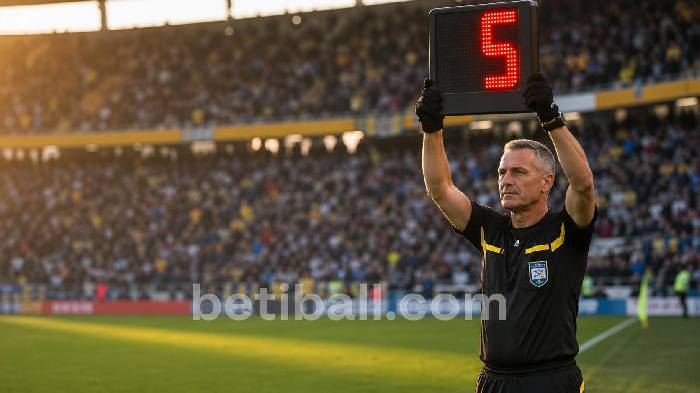


If you've ever watched a 90-minute football match run to 95 or even 99 minutes, you've already witnessed football injury time explained in real time. But most fans — and even many bettors — don't fully understand how that extra time is calculated, who controls it, or why it matters so much when you're analysing a match. At Betiball, we track stoppage time data across hundreds of leagues and competitions, and we know firsthand how dramatically those added minutes can swing a result, a stat, or a prediction model. In this guide, we break down everything you need to know about injury time in football — the rules, the calculation method, the data patterns, and the common mistakes analysts make when they ignore it.
What Is Injury Time in Football?
The term injury time — officially called stoppage time by FIFA and UEFA — refers to the additional minutes added to each half of a football match to compensate for time lost during play. The stoppage time meaning is straightforward: regulation football consists of two 45-minute halves, but the clock never stops during open play. Every minute lost to substitutions, goal celebrations, VAR checks, injuries, or time-wasting must be recovered at the end of that half.
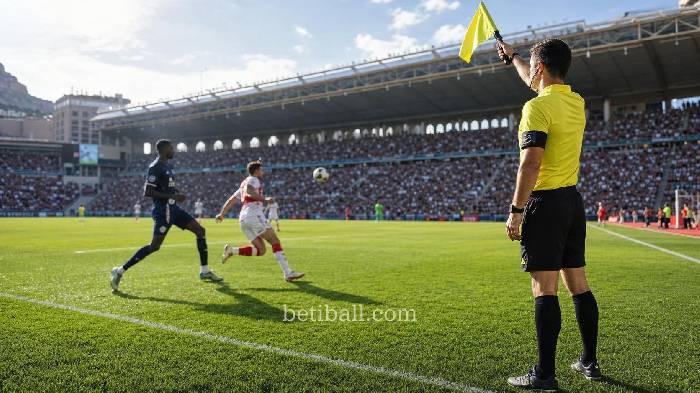
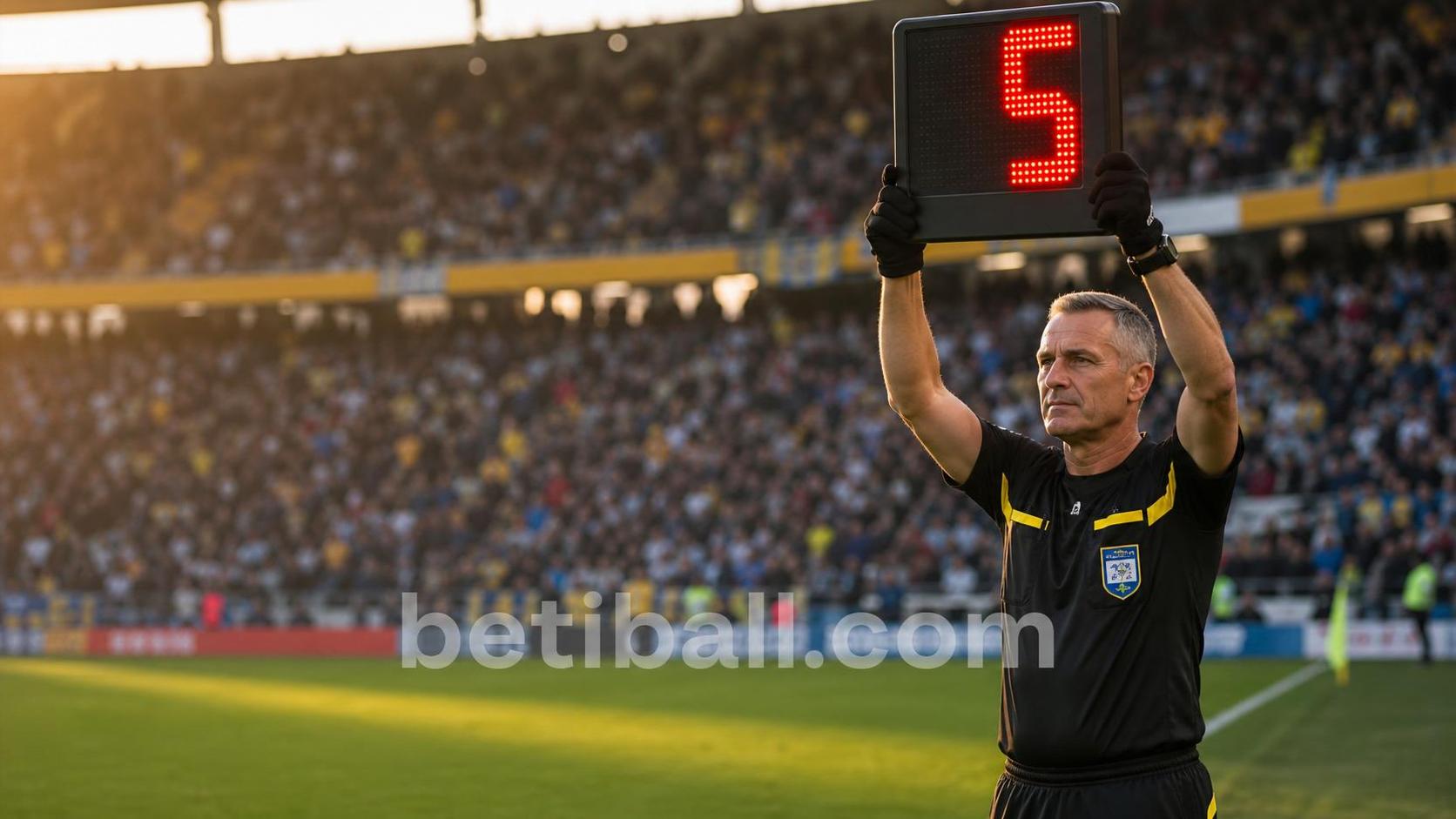
The fourth official on the touchline holds up an electronic board at the 45- and 90-minute marks to signal the minimum amount of additional time the referee intends to play. Crucially, it is a minimum, not a fixed number. The referee adds time as they judge necessary, and can exceed what the board shows if further stoppages occur during stoppage time itself.
The phrase "injury time" has been in common use since the early days of the sport, when the primary reason for added time was players receiving treatment on the pitch. Today, as we'll cover below, the scope of what triggers stoppage time has expanded considerably — especially following the introduction of VAR and, more recently, FIFA's directive to referees at the 2022 World Cup to add significantly more time than had historically been the norm.
How Is Injury Time Calculated? The Official Rules
Understanding how injury time is calculated requires knowing exactly which events FIFA's Laws of the Game (specifically Law 7) consider as "time lost." The referee is required to keep a personal record of time lost during the half and add it accordingly. The officially recognised causes include:
- Substitutions: Each substitution typically costs 30 to 60 seconds of real time.
- Assessment and removal of injured players: Any time a player receives treatment on the pitch or is stretchered off.
- Time-wasting: Deliberate delays by goalkeepers, free-kick takers, or players slow to leave after being substituted.
- Disciplinary action: Time taken to show yellow or red cards and manage related incidents.
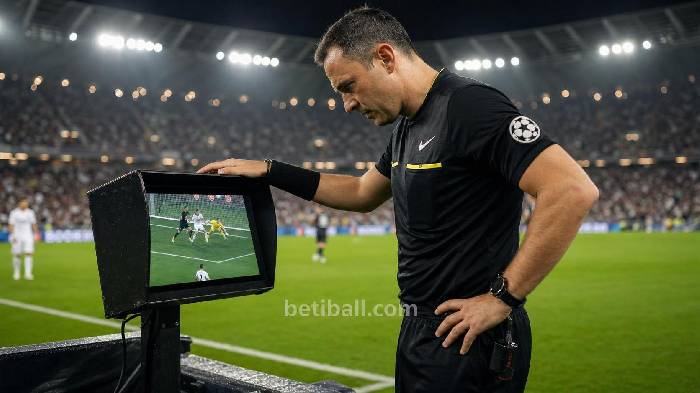
- VAR reviews: On-field reviews and lengthy VAR checks both add time to the total.
- Goal celebrations: Since the 2022 World Cup, FIFA explicitly instructed referees to factor in excessive goal celebrations.
- Medical stoppages including water breaks in extreme heat conditions.
- Any other cause: Law 7 includes a catch-all provision giving the referee discretion.
The key point for analysts: the referee adds time football referees add is entirely subjective within these guidelines. Two referees officiating identical matches could add different amounts of time based on personal judgment, style, and competitive context (a Champions League final will typically see more precise timekeeping than a mid-table league fixture).
Since Qatar 2022, top European leagues — including the Premier League, La Liga, and Serie A — have followed FIFA's lead by instructing referees to add significantly more time. Average added time in the first half of Premier League matches rose from roughly 1–2 minutes to 4–6 minutes post-2022. Second halves regularly exceed 8–10 minutes of stoppage time in high-event matches.
A Numeric Example: Calculating Stoppage Time Step by Step
Let's walk through a realistic second-half scenario to see how a referee might arrive at a stoppage time figure of 7 minutes.
| Event | Time Lost (approx.) |
|---|---|
| 3 substitutions (home team: 2, away team: 1) | ~2 min 00 sec |
| Injured player treated and substituted (stretchered off) | ~1 min 30 sec |
| VAR review for penalty decision (on-field review) | ~1 min 45 sec |
| Goal scored at 78' — celebration and restart delay | ~0 min 45 sec |
| Time-wasting by goalkeeper in final 10 minutes | ~0 min 45 sec |
| Yellow card shown + player slow to retreat for free kick | ~0 min 30 sec |
| Total estimated time lost | ~7 min 15 sec |
In this example, the fourth official's board would likely show +7 at the 90-minute mark. If the referee judges time-wasting to have been especially egregious, or if a further stoppage occurs during those seven minutes (say, another substitution at 90+3), the referee can — and should — extend play beyond the displayed figure.
For bettors analysing "both teams to score," "over/under goals," or "last goalscorer" markets, these seven-plus minutes represent meaningful additional time in which scorelines routinely change. At Betiball, our data shows that approximately 12–15% of Premier League goals in recent seasons have been scored during added time in the second half.
When Stoppage Time Matters Most for Match Analysis
Understanding stoppage time is not just academic — it has direct implications for how you read a match, evaluate a team's form, and interpret statistics.
1. Late Goals and Result Probability
Teams trailing by one goal in the 88th minute have statistically more time to equalise than pre-2022 norms would suggest. With modern second-half stoppage time averaging 6–9 minutes at the top level, the effective end of a game is closer to the 97th or 98th minute than the 90th.
2. High-Event vs Low-Event Matches
Matches with many goals, cards, substitutions, and VAR checks will produce longer stoppage times. If you're tracking "clean sheet probability" models, a low-scoring, disciplined match will have far less added time than a chaotic 3-2 thriller.
3. Referee Tendencies
Referees have measurable, consistent tendencies in how they manage added time. Some officials are known to add generously; others are more conservative. Betiball's match data tools allow you to filter historical matches by referee, which can surface these patterns for specific competitions and game contexts.
4. Winning Teams and Time Management
Teams leading late in a match will try to run down the clock, deliberately inflating stoppage time. Tracking how effectively a team manages this — and how often opponents score despite it — is a meaningful performance indicator beyond the basic 90-minute frame.

Common Mistakes When Analysing Injury Time
Even experienced analysts make errors when incorporating stoppage time into their models. Here are the five most common mistakes we see — and how to avoid them.
Mistake 1: Treating 90 minutes as the actual end of play
Any statistical model that cuts off at the 90-minute mark is systematically undervaluing late goals. Always use the full match duration including stoppage time when pulling shot, goal, and xG data.
Mistake 2: Assuming stoppage time is uniform across competitions
Premier League and Champions League stoppages are substantially longer than League Two or lower-tier European fixtures. Apply competition-specific baselines, not a single average.
Mistake 3: Ignoring the influence of the scoreline
When a team is winning, they will attempt to waste time, which paradoxically generates more stoppage time. The scoreline at 80 minutes is therefore a leading indicator of how long the match will actually last.
Mistake 4: Overlooking referee data
As mentioned above, referees are not interchangeable. A referee known for strict time enforcement will add more accurately to actual time lost, while a more permissive official may add a round number that under- or over-compensates.
Mistake 5: Conflating injury time with extra time
These are entirely different mechanisms. Stoppage time is added to the end of each 90-minute half in all matches. Extra time (ET) is an additional 30-minute period played only in knockout competitions when the score is level after 90 minutes. They are governed by different rules and serve different purposes — for a full breakdown, see our explainer linked below.

Betiball does not accept bets. All examples are for educational purposes only.
Conclusion: Use Stoppage Time Data, Not Just the Scoreline
Football injury time explained properly is more than a curiosity for casual fans — it is a meaningful variable that affects match outcomes, performance metrics, and statistical analysis. The stoppage time meaning has evolved significantly over the past three years, with modern matches playing considerably more than the traditional "a couple of added minutes" that older models were built around. Understanding how injury time is calculated, which referees and competitions produce the most added time, and how the scoreline influences it, gives any serious analyst a more accurate picture of what actually happened in a football match. At Betiball, all our match data tools are built with full-match duration in mind — because the game isn't over until the referee actually blows the final whistle.
Read more:

Your feedback helps us deliver better football betting insights.