

 Account
 Language
 Time Zone
 COEF
COEF


Football Formations Explained: How Tactical Shape Affects Match Outcomes
Learn how football formations influence tactics, expected goals, and match outcomes. See how Betiball uses tactical analysis to improve predictions.
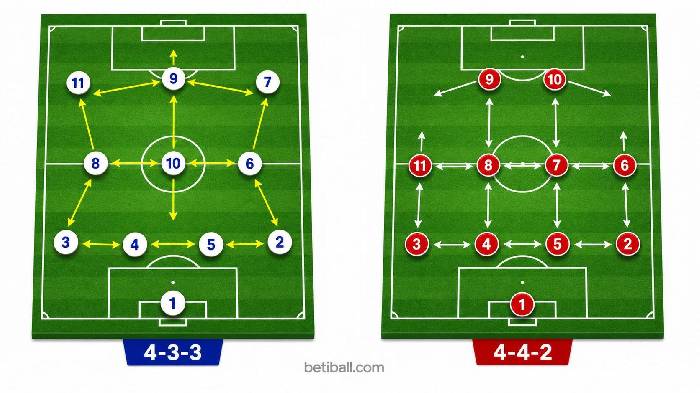


Understanding football formations is one of the most effective ways to anticipate how a match will unfold before the first whistle even blows. Whether you follow the game as a statistics enthusiast or a serious analyst, a solid football formation guide covering the 4-3-3 and 4-4-2 gives you a structural lens through which to read team behaviour, predict attacking patterns, and identify defensive vulnerabilities. At Betiball, we build our match prediction tools around precisely this kind of tactical intelligence — and in this guide, we break it all down for you.
Who This Guide Is For
This guide is written for football fans, analysts, and prediction enthusiasts who want to go beyond basic match scores and understand the deeper tactical architecture driving results. If you have ever wondered why a team with supposedly better players still loses, or why certain matches consistently produce high or low goal totals, formation analysis is the answer you have been missing.
Specifically, this guide is for you if:
- You follow top-tier European leagues — Premier League, La Liga, Serie A, Bundesliga, Ligue 1
- You use statistics platforms to inform your football predictions
- You want to understand tactical shape beyond watching highlights
- You are new to deep football analysis and need a clear, structured starting point
We designed this content as part of Betiball's broader onboarding library, so whether you are a seasoned tactical reader or completely new to football formations explained in structured depth, we have you covered.

Football Formations Explained: The Basics of 4-3-3 and 4-4-2
Football formations describe how a team's ten outfield players are organised across the pitch relative to the goalkeeper. The numbers represent defensive, midfield, and attacking lines read from back to front. Understanding this structure is the foundation of any serious match analysis.
The 4-3-3: Control, Width, and Pressing
The 4-3-3 uses four defenders, three central midfielders, and three forwards. It became the dominant tactical template for elite football clubs largely due to its adoption by FC Barcelona under Pep Guardiola and later Liverpool under Jürgen Klopp. Its core strengths include:
- Wide attacking threat: Two wingers stretch opposing defences horizontally
- Midfield triangle flexibility: Can shift between a defensive pivot plus two box-to-box runners, or a single pivot with two attacking eights
- High press effectiveness: Three forwards enable aggressive counter-pressing high up the pitch
- Positional dominance: Superior ball retention through midfield overloads
The 4-4-2: Balance, Compactness, and Directness
The classic 4-4-2 uses four defenders, a flat or slightly staggered bank of four midfielders, and two central strikers. It was the defining tactical formation of English football from the 1970s through to the early 2000s and remains highly effective at certain levels.
- Defensive solidity: Two compact midfield banks of four make central penetration difficult
- Dual striker threat: Allows for layoffs, aerial presence, and direct combinations between two forwards
- Wide midfielders: Provide width without committing a dedicated winger position
- Transitional speed: Ideal for counter-attacking teams who absorb pressure and attack vertically
4-3-3 vs 4-4-2: Advanced Tactical Breakdown
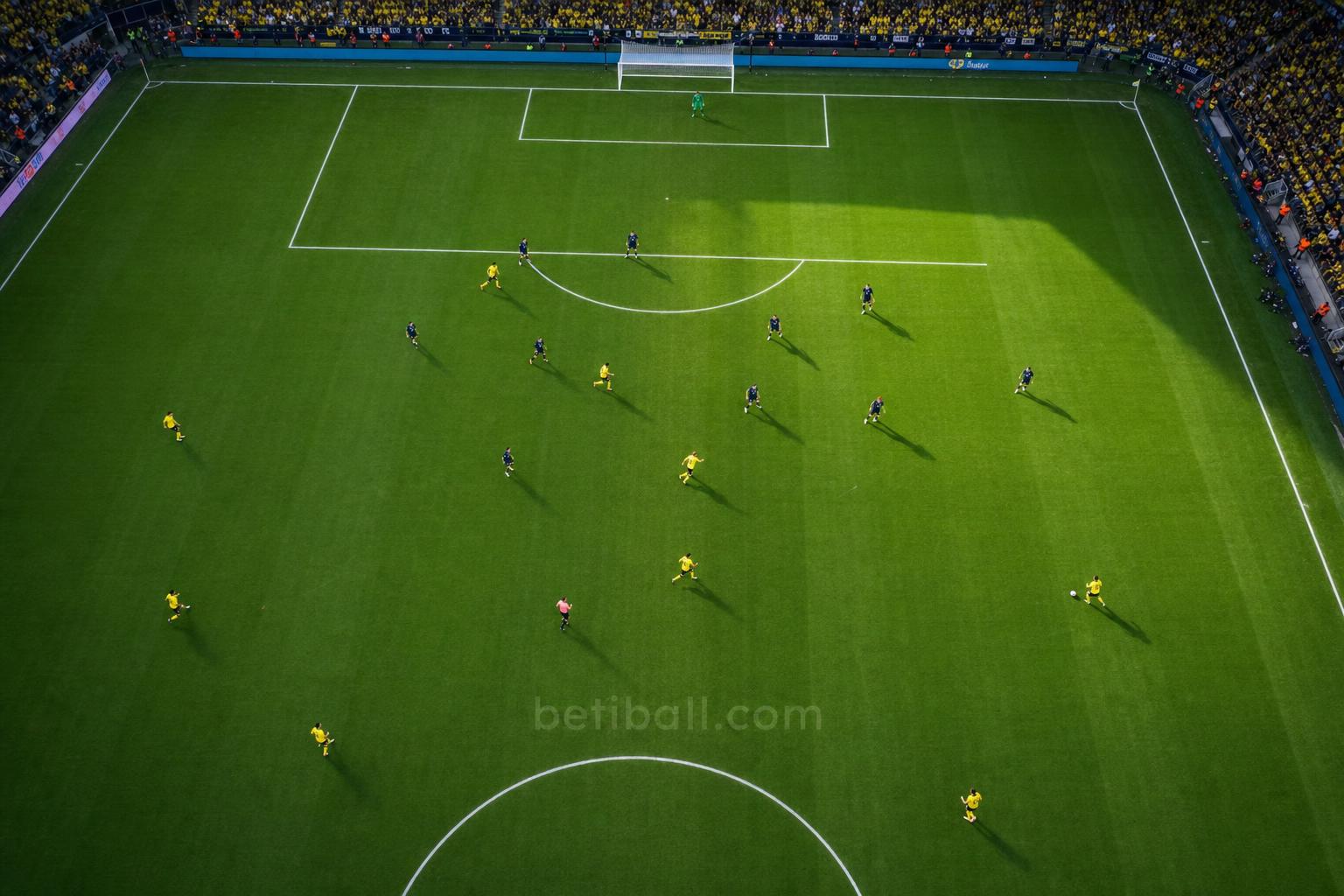
The real analytical value comes from understanding how these two formations interact when they face each other — and what statistical signals that matchup produces.
The Midfield Battle
When a 4-3-3 faces a 4-4-2, the central midfield becomes the primary battlefield. The 4-3-3's three-man midfield theoretically creates a numerical advantage over the 4-4-2's central two. However, the 4-4-2's wide midfielders can tuck inside to create a 4-2-2-2 shape in defensive transition, neutralising the overload.
In practice, data from top European leagues shows that teams playing 4-3-3 against 4-4-2 opponents average higher possession percentages (56–62%) but do not always convert this into proportionally higher expected goals. The 4-4-2 is statistically effective at limiting high-quality central chances despite conceding territorial control.
Width and Transition Dynamics
The 4-3-3's wingers tend to pin back opposition fullbacks, creating wider attacking corridors. Against a 4-4-2, this forces wide midfielders into difficult dual-responsibility roles — tracking the winger defensively while contributing forward. Teams that successfully exploit this asymmetry often generate a high volume of wide crosses and cutback opportunities.
Conversely, the 4-4-2 excels in transition. Once possession is won, vertical balls into the two strikers can immediately bypass the 4-3-3's midfield press — a key vulnerability when the pressing team's defensive line is pushed high.
Set Piece and Aerial Considerations
The 4-4-2 typically carries a structural set piece advantage. Two central strikers often include at least one physically imposing aerial presence. Statistical analysis of set piece goal rates across European leagues consistently shows 4-4-2 variants outperforming 4-3-3 teams from defensive and attacking corners alike, particularly in lower-to-mid table competition where physicality outweighs technical superiority.
Tactical Checklist: Reading Formations Before a Match
Use this checklist to systematically evaluate how a team's formation will influence the match outcome. We use similar tactical variables as inputs in our Betiball match prediction models.
| Analysis Factor | 4-3-3 | 4-4-2 | What to Watch |
|---|---|---|---|
| Midfield control | ✅ Strong | ⚠️ Vulnerable | Possession % and PPDA press intensity |
| Wide attacking threat | ✅ High | ⚠️ Moderate | Crosses per game, winger duel win rate |
| Defensive compactness | ⚠️ Exposed in transition | ✅ Solid | Counter-attack xG conceded, PPDA allowed |
| Set piece threat | ⚠️ Moderate | ✅ High | Aerial duel win % and set piece xG |
| Press efficiency | ✅ High | ⚠️ Lower | Recoveries in final third, press success rate |
| Counter-attack risk | ⚠️ Higher | ✅ Lower | Defensive line height, transitions per game |
| Goal volume tendency | ✅ More open | ⚠️ More closed | Historical over/under 2.5 goal rates |
How to Apply Formation Knowledge: Strategy Tips for Smarter Match Analysis
Knowing formations in theory is only useful if you can apply that knowledge systematically. Here are the practical strategy tips we recommend at Betiball:
1. Cross-Reference Formation With Recent xG Data
Formation creates opportunity structures, but individual quality determines conversion. Always pair your formation read with expected goals (xG) data from the last 5–8 matches. A 4-3-3 team generating 2.1 xG per game but scoring only 0.9 is likely a regression candidate — and vice versa.
2. Account for Opponent-Specific Shape Adjustments
Top managers rarely deploy a static formation. Guardiola's City may line up in a 4-3-3 on paper but shift into a 3-2-5 positional structure in possession. Study in-possession versus out-of-possession shape separately when reading pre-match lineup data.
3. Use Formation Mismatches to Predict Match Tempo
When a high-pressing 4-3-3 faces a direct 4-4-2, the match typically produces a high-intensity, transition-heavy contest in the first 30 minutes. This can create early goal windows. Conversely, two compact 4-4-2 teams tend to produce lower-scoring, tight affairs with set piece moments becoming decisive.
4. Monitor for Formation Shifts at Half-Time
Second-half formation changes dramatically alter match dynamics. If a 4-4-2 team is losing at half-time, coaches frequently shift to 4-3-3 or 3-4-3 to press higher. This creates gaps in transition that a counter-attacking opponent can exploit in the 60–75 minute window.
5. Identify the Best Formation Football for Specific Conditions
There is no universally best formation in football — context is everything. In wet, heavy conditions, direct 4-4-2 teams with strong physicality tend to outperform technically superior 4-3-3 sides. On firm artificial or well-kept pitches, the technical superiority of a 4-3-3 pressing team tends to amplify. Always factor in pitch condition, weather, and fatigue when applying formation analysis.

Your feedback helps us deliver better football betting insights.