

 Account
 Language
 Time Zone
 COEF
COEF


The Offside Rule Football Explained Simply: 2025 Guide
Learn the offside rule football explained simply — how it works, IFAB offside rule 2025 updates, VAR enforcement & key exceptions. Explore more on Betiball.
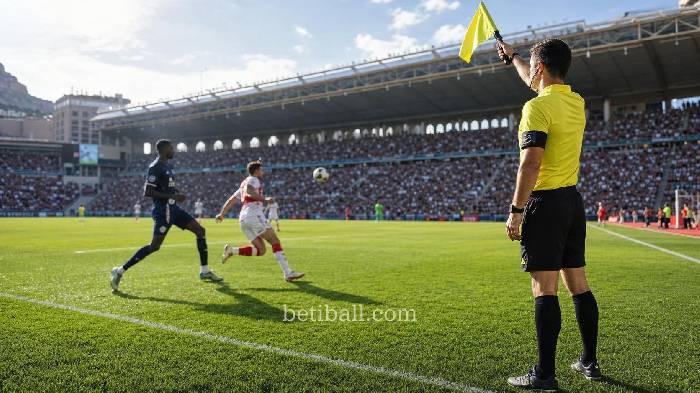


If you have ever watched football and found yourself confused when the referee's assistant raises that flag for seemingly no reason, you are not alone. The offside rule football explained simply is one of the most searched topics in the sport — and for good reason. It is a rule that can overturn a goal in seconds, reshape match outcomes, and directly influence betting markets. At Betiball, we believe that understanding the laws of the game is foundational to smarter football analysis. In this guide, we break down exactly how the offside rule works in 2025, including the latest IFAB offside rule interpretations and how VAR has changed enforcement.
What Is the Offside Rule in Football?
The offside rule is defined under Law 11 of the Laws of the Game, as published and maintained by the International Football Association Board (IFAB). In its simplest form, a player is in an offside position when they are in the opponent's half of the pitch and closer to the opponent's goal line than both the ball and the second-to-last opponent (which is almost always the last outfield defender, as the goalkeeper typically occupies the last position).
It is critical to understand that being in an offside position is not automatically an offside offence. An offence — and therefore a free kick — is only awarded when a player in an offside position becomes actively involved in play. Active involvement is defined by IFAB as:
- Interfering with play (touching or playing the ball)
- Interfering with an opponent (blocking a goalkeeper's line of sight, challenging for the ball, etc.)
- Gaining an advantage from being in that position (for example, receiving a ball that rebounds off the post or goalkeeper)
A player cannot be offside from a goal kick, corner kick, or throw-in. These are standard exceptions that have remained consistent in the IFAB offside rule framework for decades.
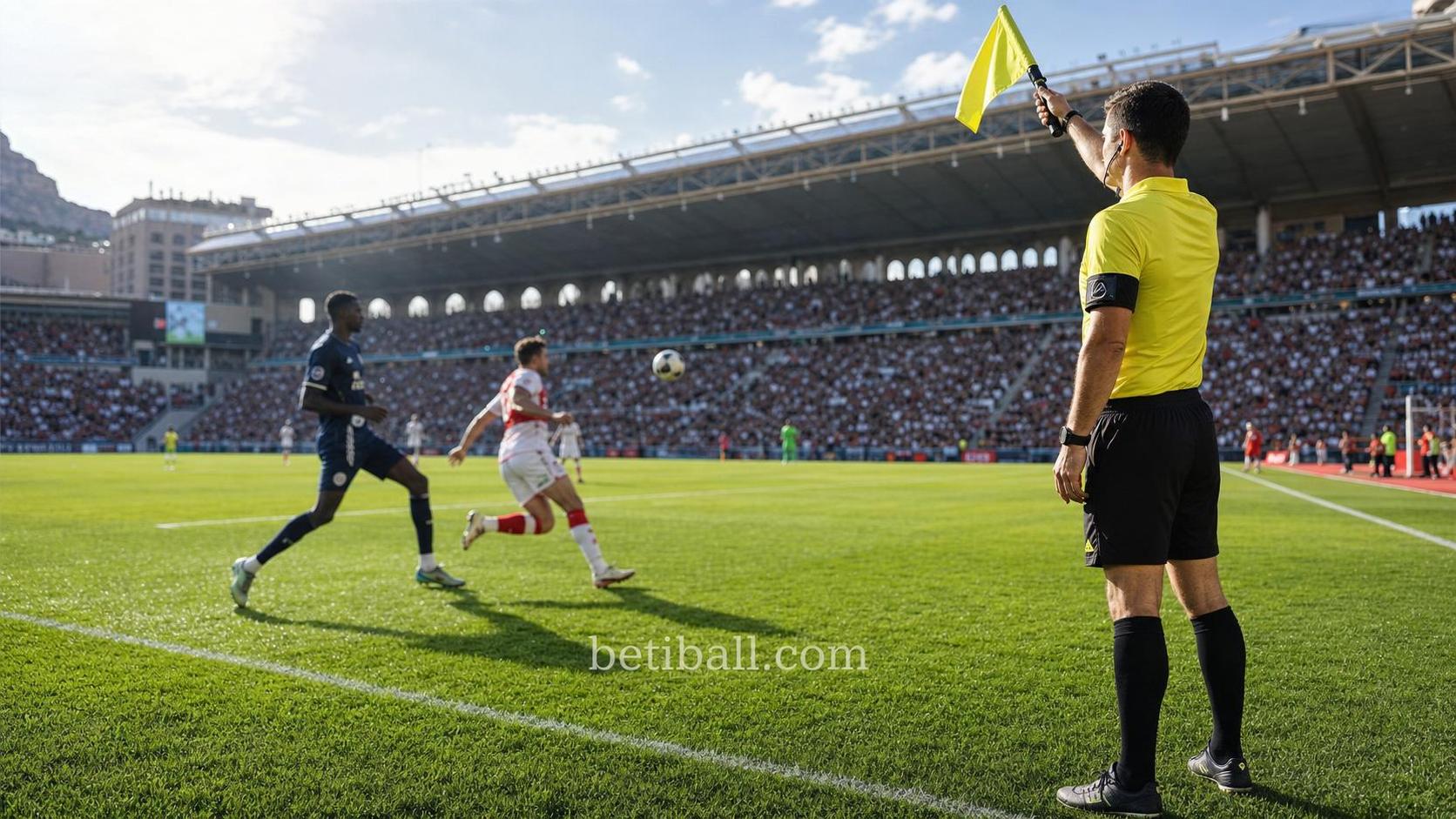
How Does the Offside Rule Work in Practice?
Understanding how offside works in football requires paying close attention to the exact moment the ball is played — not when it is received. This is the single most misunderstood element of the rule.
The offside position of a player is judged at the precise moment a teammate plays or touches the ball. If an attacker is level with the second-to-last defender at that moment, they are deemed onside. If any part of their body that can legally play the ball — head, torso, or legs (not arms) — is beyond that defender's line at that exact frame, they are offside.
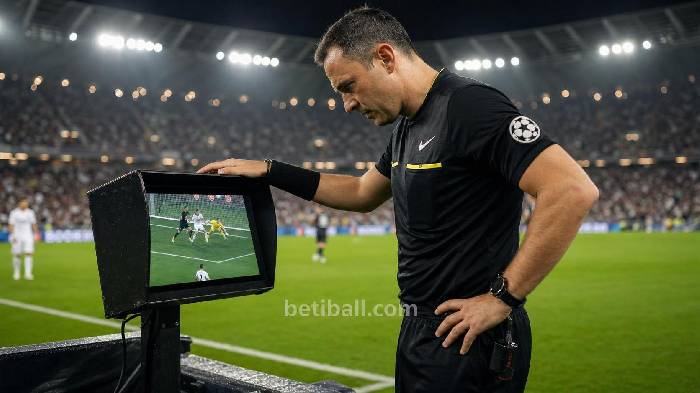
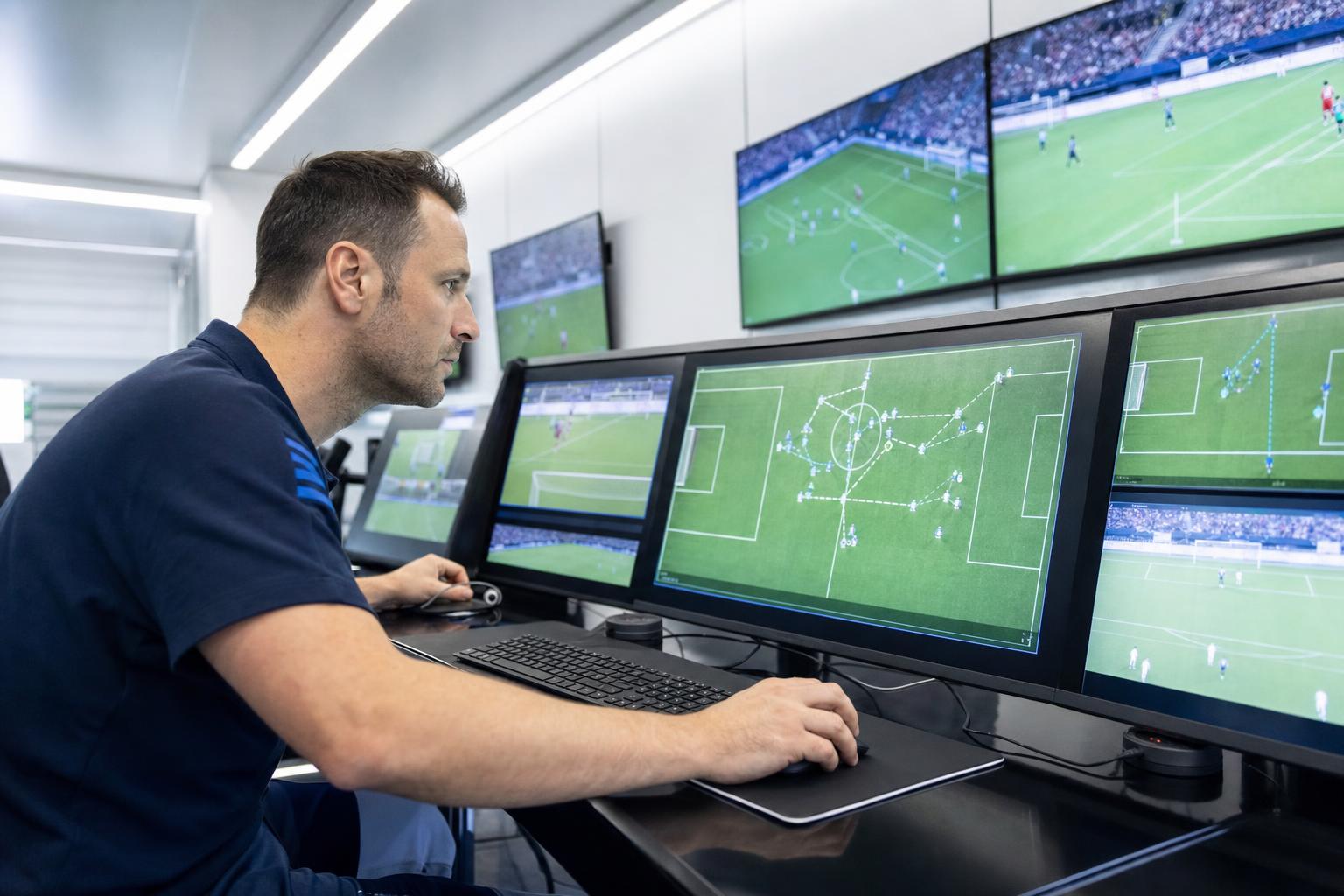
VAR technology has refined this process significantly. In the modern game, VAR officials use semi-automated offside technology (SAOT) — a system now deployed across UEFA Champions League, Premier League, Serie A, and other top competitions — to draw automated lines based on skeletal tracking of player positions. This eliminates the human error involved in traditional linesman flag decisions and has been central to the offside rule 2025 enforcement landscape.
Key procedural points to understand:
- The flag from the assistant referee is now often delayed intentionally. Officials wait to see if the attacking move breaks down naturally before interrupting play.
- If a goal is scored and then reviewed as potentially offside, play is paused and VAR applies its automated lines.
- A player in an offside position who does not become active is free to continue playing — the assistant referee should not flag until involvement is confirmed.
A Real-World Numeric Example
Let us walk through a concrete scenario to make this as clear as possible.
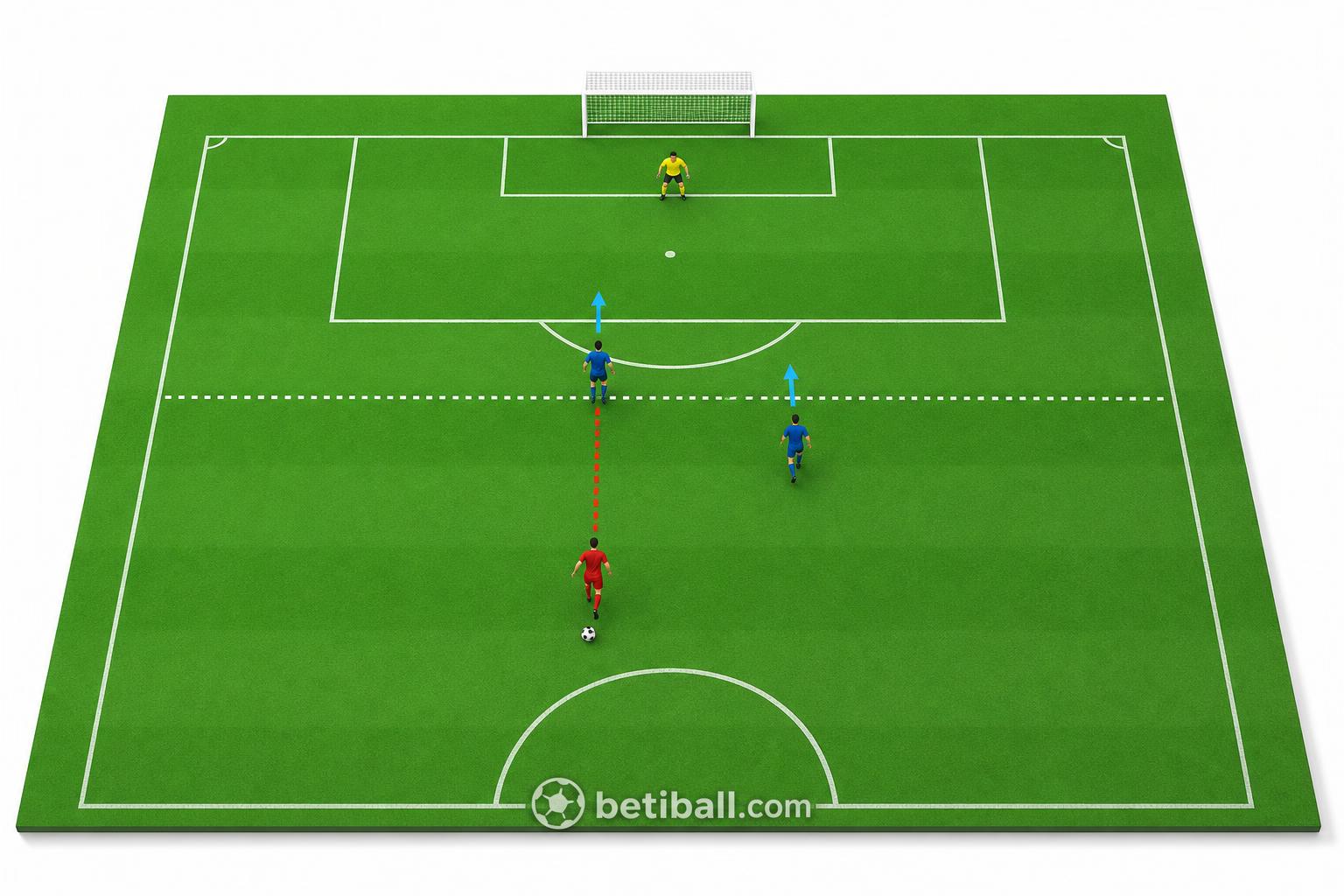
Imagine the following positions on the pitch, measured in meters from the opponent's goal line at the moment the ball is played:
- Goalkeeper: 0.5m from goal line
- Last outfield defender: 18m from goal line
- Striker (attacker): 17m from goal line
- Ball: 25m from goal line
In this scenario, the striker is at 17m, which is closer to the goal line than the last outfield defender at 18m. The striker is therefore in an offside position the moment the ball is played. If the ball reaches the striker and they shoot or control it, the assistant referee should flag — or VAR should intervene — for an offside offence.
Now change one variable: the striker is at 18.5m when the ball is played. They are now level with or behind the last outfield defender. Onside. No offence.
This centimetre-level precision is exactly why semi-automated offside technology matters so much in the offside rule 2025 era. In high-stakes matches, margins this small have determined Champions League semi-final outcomes.
When Does the Offside Rule Apply — and When Doesn't It?
One of the most common areas of confusion when people learn about the offside rule football explained simply is understanding the exceptions. The rule does not apply in the following situations:
- Goal kicks: A player can receive the ball in any position directly from a goal kick without being offside.
- Corner kicks: No offside can be called from a direct corner kick delivery.
- Throw-ins: No offside offence can occur directly from a throw-in.
- Own half of the pitch: A player in their own half cannot be offside, regardless of positioning.
- Deliberate play by a defender: If a defender deliberately plays the ball (not a deflection), the offside position is reset. Note: IFAB updated guidance in recent seasons clarifies that a deflection — where the ball changes direction but the defender has no control — does not reset the offside position. This is a nuanced distinction that has affected several high-profile VAR decisions.
We also flag a common misreading of the handball component: if the ball strikes an attacker's arm while in an offside position, and that attacker then becomes involved in play, the offside offence still applies. The arm ruling does not cancel or override the offside decision.
Common Offside Rule Mistakes Fans (and Bettors) Make
From a football analytics and betting perspective, misunderstanding offside leads to poor match analysis. Here are the most frequent errors we see:
1. Assuming being in offside position = automatic offside. As we established, position alone is not an offence. A player can stand offside all day without triggering a foul. Only active involvement counts.
2. Ignoring timing of the pass. Punters and fans often judge offside by where a player is when they receive the ball. The correct reference point is the moment the ball is kicked, not the moment it arrives.
3. Misunderstanding "level is onside." If a player is exactly level — shoulder to shoulder, hip to hip — with the last defender at the moment of the pass, they are onside. The rule favours the attacker in level positions.
4. Forgetting the "second-to-last opponent" rule. When a goalkeeper comes off their line or is far forward, and the last outfield defender has pushed up, the second-to-last opponent reference shifts accordingly. This creates unusual scenarios worth tracking in live data.
5. Overlooking delayed flags in live betting. With delayed flagging protocols now standard across elite football, a potential offside goal may stand for several seconds before review. Bettors watching live feeds should understand this does not confirm a valid goal.
Conclusion: Why Offside Matters for Football Analysis
The offside rule is far more than a technicality. In elite football, offside decisions impact match results, league standings, and — critically for those who analyse the game professionally — betting outcomes and statistical models. Understanding precisely when the rule applies, how VAR enforces it in 2025, and where the common misreads occur gives any football analyst or bettor a meaningful edge in match interpretation.
At Betiball, we integrate offside frequency data, high-line defensive statistics, and SAOT-validated decision tracking into our match analysis tools. Whether you are studying a team's defensive line management or assessing how a striker's movement patterns generate offside traps, this rule is central to modern tactical football intelligence.
Bookmark this guide, revisit it before your next deep-dive analysis session, and explore the rest of our football knowledge base for more data-driven breakdowns.

Betiball does not accept bets. All examples are for educational purposes only.
Read more:

Your feedback helps us deliver better football betting insights.