


 Account
 Language
 Time Zone
 COEF
COEF


First Goalscorer Betting Explained: How to Find Real Value
Learn how first goalscorer betting works, how odds are built, and how to find value using player data and match context. Explore more on Betiball.




2026-07-09
France vs Morocco - Prediction & Odds



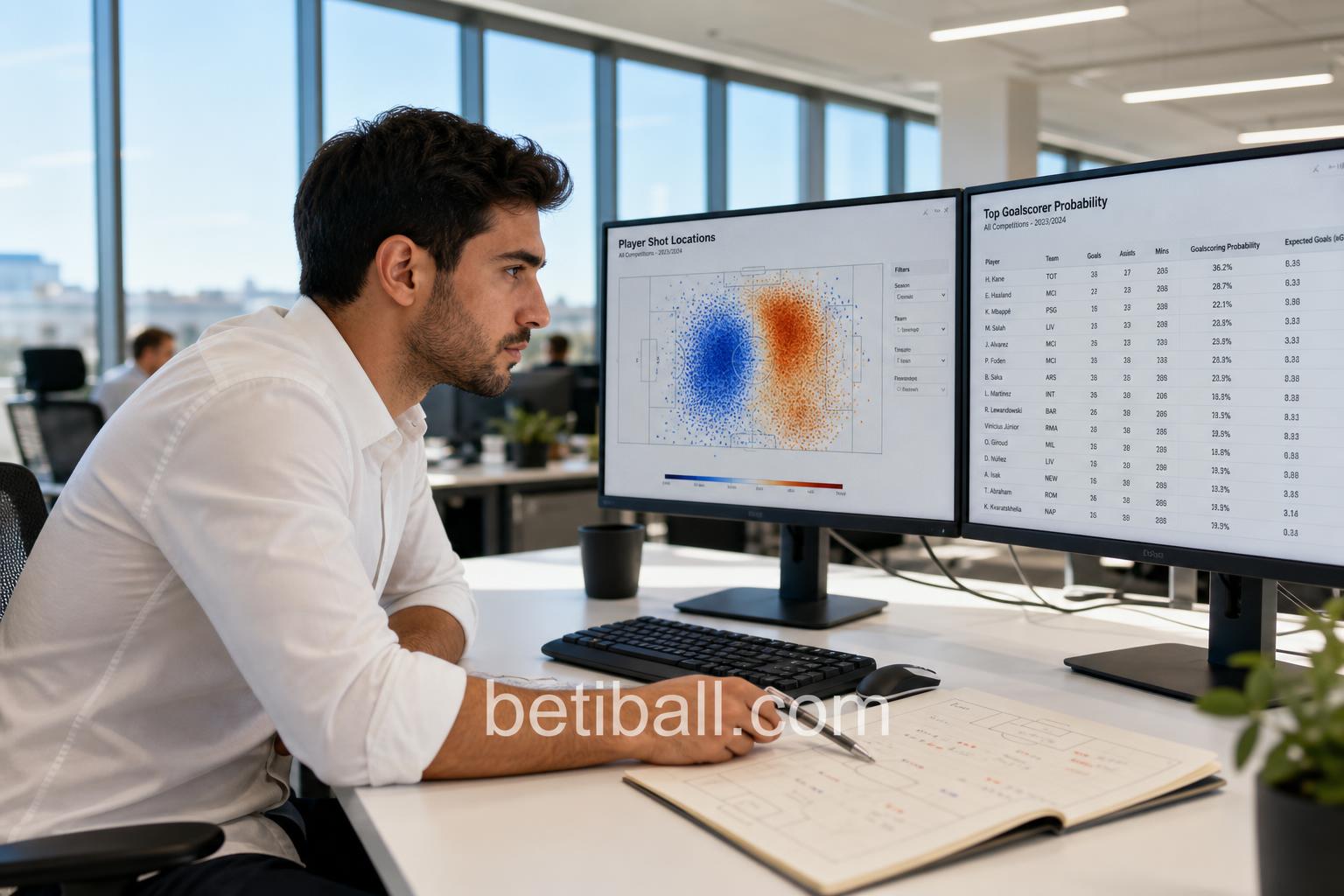
If you've ever placed a bet on which player will break the deadlock, you already know the appeal — and the frustration — of first goalscorer betting explained in its simplest form. The market looks straightforward: pick a player, watch the game, collect your winnings if the ball hits the net first through them. In practice, however, this is one of the most nuanced goalscorer markets in football, with significant variation in odds, rules, and value across different bookmakers and match contexts. This guide breaks it all down: how the market is structured, where the edge actually lies, and how to use data to make smarter selections. Betiball users can filter by attacking player stats, shot frequency, and fixture difficulty to shortlist candidates systematically rather than relying on gut feel.

Who This Guide Is For
This guide is written for bettors who have moved beyond basic match result markets and want to understand the mechanics and value opportunities within the goalscorer market football ecosystem. Whether you regularly place anytime goalscorer tips or you're making the transition from result betting to player-level markets, the content here is designed to sharpen your thinking. You should already understand basic concepts like implied probability, expected value, and line shopping. If those terms are unfamiliar, start with the Betiball Glossary linked at the bottom of this article before continuing.
Specifically, you'll benefit most from this guide if you:
- Regularly bet on Premier League, Champions League, La Liga, or Bundesliga matches
- Want to understand how bookmakers price goalscorer markets and where they leave room for value
- Are looking to apply statistical filters rather than relying on form opinions alone
- Want to compare first goalscorer odds against anytime scorer odds systematically
The Basics of First Goalscorer Betting
At its core, the first goalscorer market asks a single question: which player will score the first goal in a given match? But beneath that simplicity are several rule variations that can affect your payout and your strategy.
Key Rules You Must Know
Own goals do not count. Almost universally, if the opening goal is an own goal, bets on first goalscorer are void and stakes are returned. This matters more than most bettors realise — in leagues like the Premier League, own goals account for roughly 3–4% of all goals in a season. That's a meaningful chunk of first-goal situations that will result in void bets rather than losses or wins.
Player must start or come on before the goal. Most bookmakers require the selected player to be on the pitch — either as a starter or a substitute who has already entered the game — at the time the first goal is scored. A player named in the starting XI who is substituted off before the opener does not qualify in most ruleset variations. Always verify the specific operator rules.
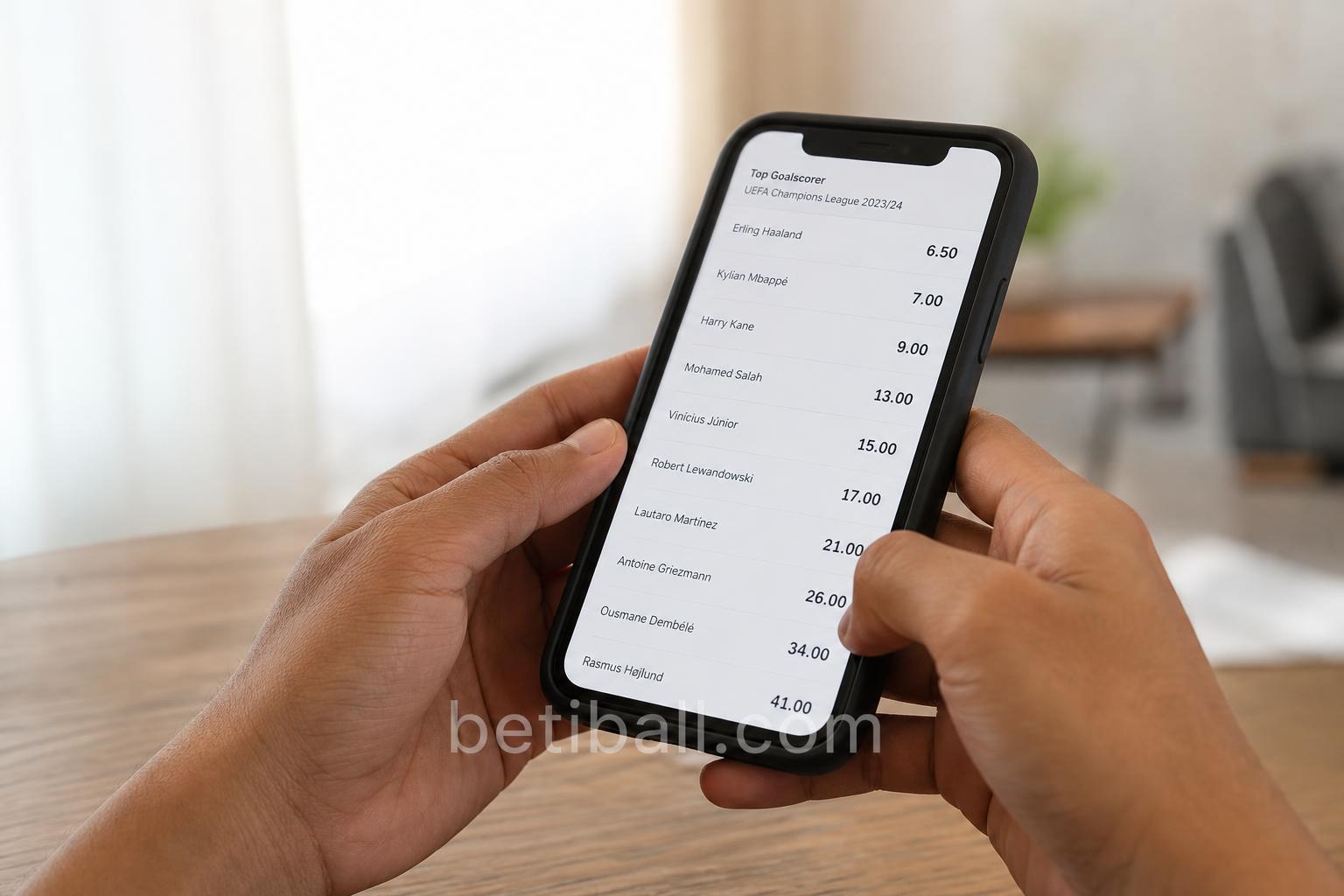
First goalscorer vs anytime goalscorer: The first goalscorer market pays higher odds than the anytime goalscorer market because it requires a specific event ordering. A striker who scores 15 league goals per season might be priced at 5/1 for anytime goalscorer but 15/1 or higher for first goalscorer. The implied probability gap between those two numbers reflects the bookmaker's model of goal-timing distribution — and it's often where bettors can find discrepancies.
How Bookmakers Build the Price
Bookmakers typically start with a player's expected goals (xG) contribution per match, then factor in the number of likely goals in the game, team attacking patterns, penalty-taking responsibility, and historical goal-scoring sequence data. The resulting implied probability is then inflated by the overround — typically 15–25% in this market, significantly higher than match result markets — meaning the aggregate implied probability of all players listed often sums to 130% or more. That's the bookmaker's built-in margin, and it's why selective betting in this market beats blanket coverage.
Advanced Concepts: Finding Value in First Goalscorer Odds
Once you understand the structure, the next step is identifying where the bookmaker's model underestimates a player's probability of opening the scoring. Three data layers are most actionable.
1. Shot Volume in Early Match Periods
Not all goal threats are equal in terms of when they tend to score. Some forwards are front-loaded in their goal contributions — they score disproportionately in the first 30 minutes. Others peak in the second half. Betiball's player statistics pages allow you to filter for goals scored by time period, which gives you a quick read on whether a forward has a tendency to be an early-goal threat versus a late-goal contributor. A striker with 40% of his goals in the first 30 minutes of matches is structurally better suited to the first goalscorer market than his overall goal tally suggests.
2. Set Piece Dependency and Penalty Duties
Players who score primarily from set pieces or penalties are less reliable first goalscorer candidates than their overall numbers imply. Penalties and corners are reactive events that tend to occur later in matches as defensive pressure builds. A centre-back who scores six goals a season — all headers from corners in the final 20 minutes — is virtually useless in the first goalscorer market despite having a meaningful goal contribution rate. Strip out non-open-play goals when assessing first goalscorer candidates.
3. Opponent Defensive Shape and Early Pressing Style
Teams that press high and aggressively in the opening 15 minutes create more early transitions and, by extension, more first-goal opportunities. When a high-pressing team with an attacking centre-forward hosts a low-block side likely to absorb pressure, the probability of the home striker scoring early is higher than the base rate suggests. Cross-referencing opponent defensive compactness data with striker shot-on-target rates in open play gives you a refined probability estimate to compare against the listed first goalscorer odds.
Strategy Checklist: Before You Place a First Goalscorer Bet
Use this checklist every time you're evaluating a potential first goalscorer selection. A candidate should meet the majority of these criteria to represent a genuine value opportunity.
| Criterion | What to Check | Why It Matters |
|---|---|---|
| Confirmed starter | Team news 1–2 hours before kickoff | Avoids wasted bets on non-starters; affects eligibility rules |
| High open-play shot frequency | Shots per 90 mins (non-set piece) | Filters out players whose goals come primarily from dead balls |
| Early-match goal tendency | Goals scored in first 30 mins (% of total) | Directly improves alignment with first goalscorer market structure |
| Opponent defensive weakness | Opponent goals conceded in first 30 mins per match | Increases base rate of early goals in this specific fixture |
| Own goal risk awareness | Both teams' historical own goal frequency | High own goal tendency in fixture = higher void-bet probability |
| Implied probability vs true probability | Convert decimal odds to %; compare to your estimated probability | Only bet when your estimate meaningfully exceeds the implied probability |
| Overround check | Sum all player implied probabilities in the market | High overround markets reduce long-term EV; target tighter books |
| Anytime goalscorer cross-reference | Compare first vs anytime odds for the same player | Identifies if first goalscorer price is disproportionately short or long |
Practical Application: Turning Analysis Into Selections
Theory only has value when it translates into a repeatable process. Here is a practical workflow for approaching the first goalscorer market on a match-by-match basis.
Step 1 — Build your long list. Using Betiball's player filter tools, identify the top two or three attacking players per match based on open-play xG per 90 minutes and shot frequency. Limit your review to players who are expected starters and who operate in central or advanced central positions.
Step 2 — Apply early-goal filters. Reduce your long list by checking each player's proportion of goals scored before the 30-minute mark. You're looking for players where this figure is 35% or higher, suggesting a structural tendency rather than noise.
Step 3 — Contextualise the fixture. Check the opponent's tendency to concede early. A team that concedes over 30% of their goals in the first half — particularly in the opening 30 minutes — amplifies the value of an early-goal tendency forward facing them.
Step 4 — Price the opportunity. Convert the bookmaker's first goalscorer odds to implied probability. Build your own probability estimate using the data above. Only proceed if your estimate exceeds the implied probability by a meaningful margin — typically at least 20% relative (e.g., you estimate 12% true probability against an implied 9%).
Step 5 — Stake proportionally. Given the inherently high-variance nature of this market, keep individual stakes modest relative to your overall bankroll — typically 1–2% of bank per selection. The odds are long, which means variance is high even when you have a genuine edge.
The anytime goalscorer market can serve as a corroboration tool: if a player represents value in the first goalscorer market, they should typically also look reasonable in the anytime market. A wildly divergent implied probability between the two for the same player often indicates the first goalscorer price has been rounded or distorted, which can work in your favour.
Betiball does not accept bets. All examples are for educational purposes only.
Conclusion
The first goalscorer market rewards bettors who go beyond the headline name and apply a structured, data-driven selection process. Understanding how bookmakers build the price, identifying players with genuine early-match goal tendencies, filtering out set-piece-dependent scorers, and rigorously comparing implied probability against your own estimates — these are the habits that separate disciplined bettors from recreational ones. Use the checklist above as your pre-bet routine, and leverage Betiball's statistical filters to make that analysis faster and more reliable. The edge in this market is real, but it requires precision to access consistently.
Read more:

Your feedback helps us deliver better football betting insights.