


 Account
 Language
 Time Zone
 COEF
COEF


How to Read Football Odds: Decimal, Fractional và American Odds Explained
Confused by football odds? Discover how Decimal, Fractional, and American odds work, how to convert between formats, and how to calculate implied probability and potential payouts. Perfect for beginners and experienced bettors looking to understand betting markets.



Understanding how to read football odds is the single most important skill any serious bettor can develop. Before you analyze a match, assess form, or consider value, you need to decode what the numbers on your screen actually mean. Odds are not random — they are a market signal, shaped by bookmaker margins, public money, and probabilistic modelling. Whether you encounter decimal odds on a European platform, fractional odds on a British site, or American odds on a US sportsbook, each format tells the same story through a different language. This guide breaks down every format, translates them into implied probability, and shows you how to use that knowledge to make sharper decisions. Betiball provides the statistical context that makes this knowledge actionable.
Who This Guide Is For
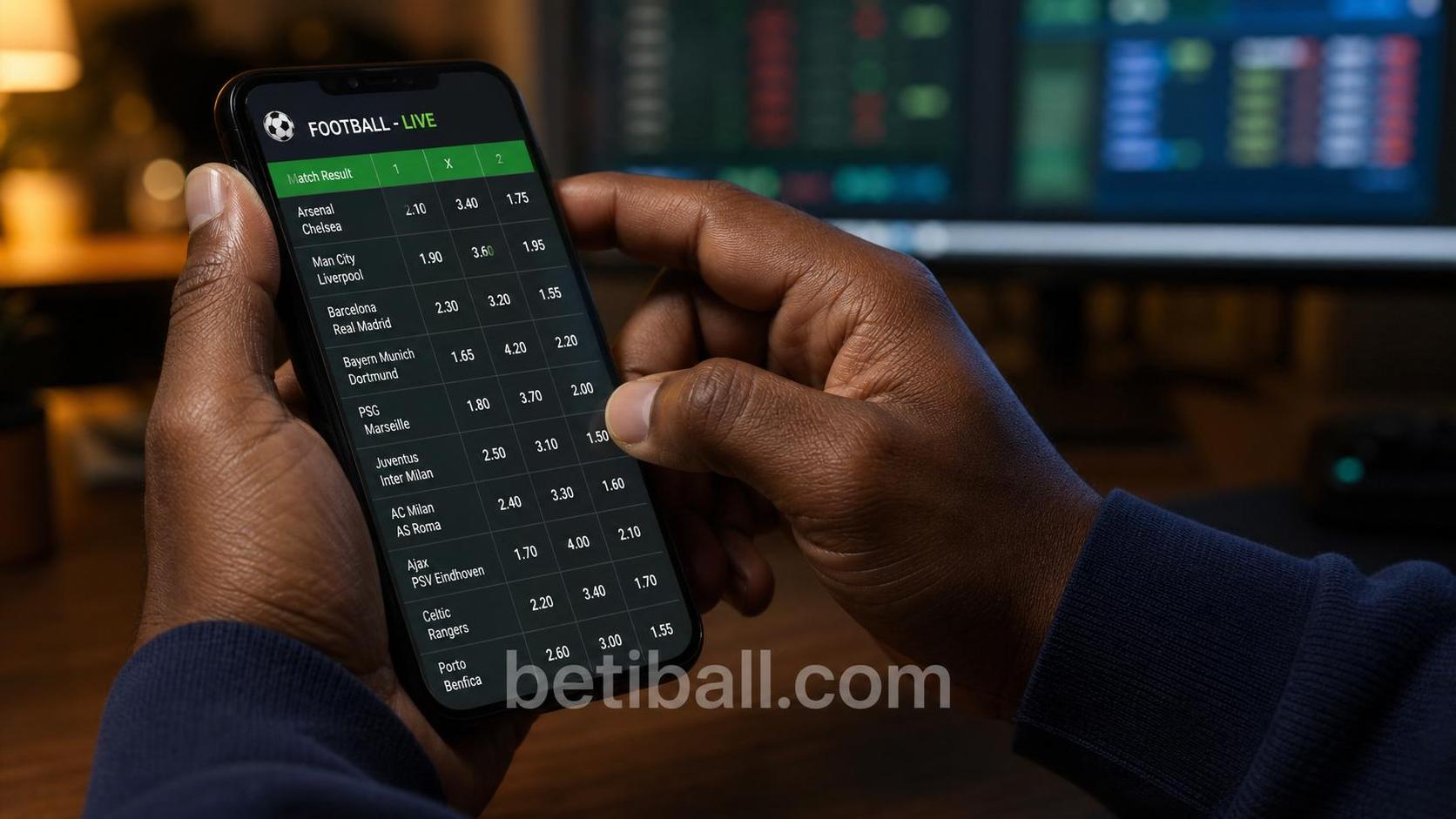
This guide is written for bettors who are moving beyond gut instinct. If you have placed a bet before but still feel uncertain when odds shift from 2.50 to 2.10 and cannot immediately tell what that means in probability terms, this guide is for you. It is also relevant for data-driven football fans who want to cross-reference bookmaker prices against statistical models — including the match prediction tools available through Betiball's market filter pages.
You do not need a mathematics degree. You do need the willingness to treat betting as a discipline rather than entertainment. The bettors who sustain long-term performance are those who understand every number they act on.
The Three Odds Formats: Basics Explained
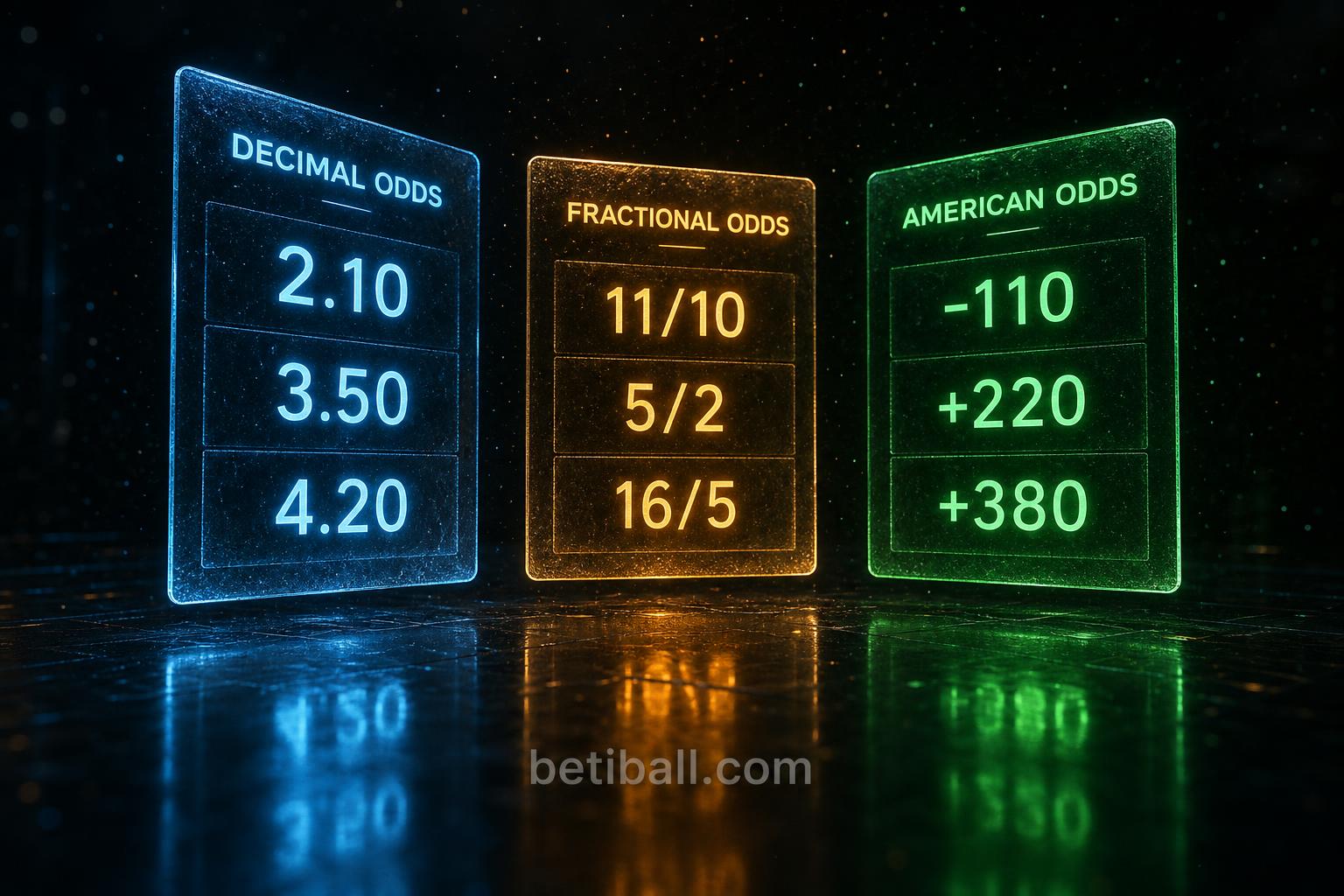
There are three dominant odds formats used globally in football betting. Each format expresses the same underlying probability, just in a different structure. Knowing how to read and convert between them instantly is a foundational skill.
Decimal Odds Explained
Decimal odds are the most intuitive format and the global standard on most European and international platforms. A decimal odd represents your total return per unit staked — including your original stake.
Formula: Profit = (Decimal Odd × Stake) − Stake
Example: Arsenal to win at 2.40. You stake €100.
Return = 2.40 × €100 = €240. Profit = €140.
To convert decimal odds to implied probability:
Implied Probability (%) = (1 ÷ Decimal Odd) × 100
At 2.40: (1 ÷ 2.40) × 100 = 41.67%
Decimal odds below 2.00 indicate the market considers that outcome more likely than not. Odds above 2.00 represent underdogs or outcomes the market prices at less than 50% likelihood.
Fractional Odds
Fractional odds are the traditional British format, still common on UK sportsbooks and horse racing markets. They express profit relative to stake — not total return.
Formula: Profit = (Numerator ÷ Denominator) × Stake
Example: Chelsea at 5/2. You stake €100.
Profit = (5 ÷ 2) × €100 = €250. Total return = €350 (profit + stake).
To convert fractional odds to implied probability:
Implied Probability (%) = Denominator ÷ (Numerator + Denominator) × 100
At 5/2: 2 ÷ (5+2) × 100 = 28.57%
Evens (1/1) in fractional format equals 2.00 in decimal — a 50% implied probability before margin. Odds-on prices (e.g. 1/2) mean you profit less than your stake, indicating a strong favourite.
American Odds (Moneyline) in Football
American odds in football — also called moneyline odds — operate on a base-100 model and are displayed with a positive or negative sign. They are standard on US sportsbooks covering MLS, Champions League, and international tournaments.
Negative odds (favourite): The number tells you how much you must stake to profit $100.
Example: −150 means stake $150 to profit $100. Total return = $250.
Positive odds (underdog): The number tells you how much you profit from a $100 stake.
Example: +220 means stake $100 to profit $220. Total return = $320.
Implied probability conversions:
Negative: Implied % = |Negative Odd| ÷ (|Negative Odd| + 100) × 100
−150: 150 ÷ 250 × 100 = 60%
Positive: Implied % = 100 ÷ (Positive Odd + 100) × 100
+220: 100 ÷ 320 × 100 = 31.25%
Advanced Concepts: Margin, Value, and Line Movement
Reading odds at face value is only the first layer. Professional bettors go further — they interrogate what odds reveal about market opinion, bookmaker bias, and potential value.
The Bookmaker Margin (Overround)
Bookmakers do not offer true odds. They build a margin — also called the overround — into every market. This ensures their implied probabilities sum to more than 100%, guaranteeing long-term profitability regardless of the outcome.
Example — Premier League match:
Home Win: 2.10 → 47.62%
Draw: 3.40 → 29.41%
Away Win: 3.60 → 27.78%
Total: 104.81% → The 4.81% excess is the bookmaker margin.
A lower margin market is more efficient and bettor-friendly. Asian handicap and totals markets typically carry margins of 2–3%, while some match result markets run as high as 6–8%.
Identifying Value Bets
A value bet exists when your assessed probability of an outcome is higher than the bookmaker's implied probability. This is the core principle of profitable long-term betting.
Value formula: Value = (Your Probability × Decimal Odd) − 1
If Value > 0, the bet has positive expected value (EV+).
Example: You assess a team has a 55% chance of winning. Bookmaker offers 2.10.
Value = (0.55 × 2.10) − 1 = 1.155 − 1 = +0.155 → Positive value.
This is where Betiball's statistical models become particularly useful. By comparing model-derived probabilities against live market odds, you can systematically identify where the market may be mispricing an outcome.
Line Movement and What It Signals
Odds move. A line that opens at 2.50 and drifts to 2.80 tells you money has entered on the opposing side. A line that shortens from 2.50 to 2.10 suggests sharp money, injury news, or a significant shift in public sentiment.
Tracking line movement over 24–72 hours before kickoff gives you a data point about where informed money is moving. Significant steam moves — rapid, coordinated line compression — often indicate professional syndicate activity.

Strategy Tips: Applying Odds Knowledge in Practice
Knowledge of odds formats becomes a competitive edge only when applied systematically. The following principles separate recreational bettors from those who approach football markets analytically.
Odds Format Conversion Checklist
| Odds Format | Example | Profit on €100 Stake | Implied Probability | Best Used On |
|---|---|---|---|---|
| Decimal | 2.40 | €140 | 41.67% | European/global markets |
| Fractional | 7/5 | €140 | 41.67% | UK sportsbooks |
| American (Favourite) | −142 | €70.42 | 58.68% | US platforms, MLS |
| American (Underdog) | +140 | €140 | 41.67% | US platforms, MLS |
Key Strategy Principles
- Always convert to implied probability first. Never evaluate an odds format at face value. Convert every price to a percentage before assessing whether it represents value.
- Compare across multiple bookmakers. A 5-10% variance in decimal odds between platforms can be the difference between a positive and negative EV bet. Line shopping is non-negotiable for serious bettors.
- Factor out the margin before comparing to your model. Strip the overround from the implied probability to understand the bookmaker's "true" assessment of each outcome.
- Track your assessed probability versus market price. Build a simple spreadsheet logging your pre-game probability estimate, the available odds, the EV calculation, and the result. Over 200+ bets, this reveals whether your model has genuine edge.
- Treat odds movement as data, not instruction. Line movement is informative, not a signal to blindly follow. Context matters — assess whether the movement is driven by public money or sharp action.
- Use statistical platforms to calibrate your probability assessments. Betiball's match prediction tools allow you to cross-reference form data, expected goals (xG), and head-to-head records against current market prices. Use the market filter pages to identify which match markets align with your model's edge.

Betiball does not accept bets. All examples are for educational purposes only.
Conclusion
Odds are the fundamental language of football betting markets. Mastering decimal odds, understanding fractional odds history, and decoding American odds in football contexts gives you a complete toolkit for engaging with any global market. More importantly, converting every price into its implied probability — and then stress-testing that probability against your own analysis — transforms odds reading from a passive activity into a genuine analytical process. The edge in football betting belongs to those who see odds as data, not just prices. Use Betiball's statistical resources to benchmark your assessments, track line movement, and identify where market mispricings create genuine value opportunities.
Read more:

Your feedback helps us deliver better football betting insights.