


 Account
 Language
 Time Zone
 COEF
COEF


How to Track Football Betting Results: A System That Works
Learn how to track football betting results with a simple system. Use a betting spreadsheet to track wins losses betting and improve your strategy. Explore more on Betiball.



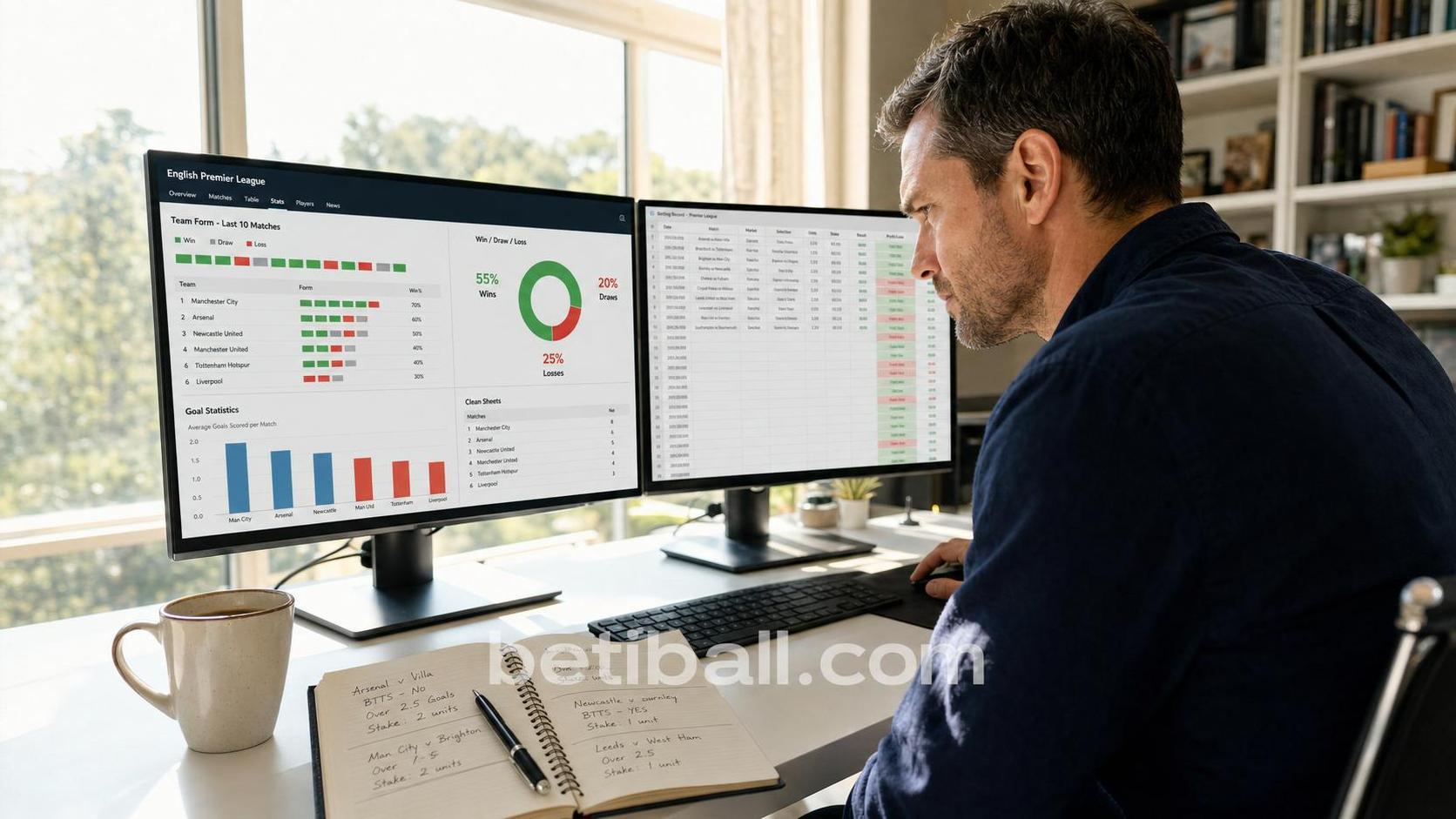
If you want to become a smarter, more profitable football bettor, learning how to track football betting results is the single most important habit you can build. Most bettors rely on memory — and memory is dangerously unreliable. They remember the winners and forget the losses, which creates a distorted picture of performance. A structured tracking system cuts through the noise, reveals patterns, and turns raw data into actionable insight. Betiball is built on exactly this philosophy: evidence over instinct, data over gut feeling.
Who This Guide Is For
This guide is written for serious football bettors — people who treat their betting activity as a discipline rather than entertainment. If you place more than five bets per week, use odds comparison, or follow specific leagues with statistical depth, then a formal tracking system will transform how you operate.
You do not need to be a data scientist. You do not need expensive software. What you do need is consistency and a willingness to be honest with yourself about every single result — the ugly ones included. Whether you bet on the Premier League, La Liga, or the Bundesliga, the methodology is the same. The numbers tell a story, and your job is to read it clearly.
This guide is equally relevant if you have been betting casually for years and have no real idea whether you are profitable over time. Spoiler: most casual bettors are not, precisely because they never track anything.

The Basics of Betting Record Keeping
Before you build anything complex, you need to nail the fundamentals. A betting record is only useful if it captures the right information. Miss a column and you lose visibility on an entire dimension of your performance.
Here is the minimum viable data set every bettor should record for every single bet:
- Date — when the bet was placed
- Match — teams and competition
- Market — 1X2, Over/Under, Both Teams to Score, Asian Handicap, etc.
- Selection — exactly what you backed
- Odds — decimal odds at time of placement
- Stake — amount wagered
- Result — Win / Loss / Void / Push
- Profit/Loss — calculated return minus stake
- Running Bank — cumulative bankroll after each bet
A simple Google Sheets or Excel betting spreadsheet built around these columns is enough to get started. Use one row per bet, one sheet per month. Keep it consistent. Even if you have only placed ten bets, start today — do not wait until you have "enough data." Consistency over time is the foundation.
The most critical habit is recording the bet before the match kicks off, not after. Post-result recording invites selective memory and confirmation bias. Discipline here is non-negotiable.
Advanced Metrics to Track Wins and Losses in Betting
Once you have two to three months of consistent data, you can move beyond simple profit and loss. Advanced bettors track a second layer of metrics that reveal why results look the way they do — and where edges actually live.
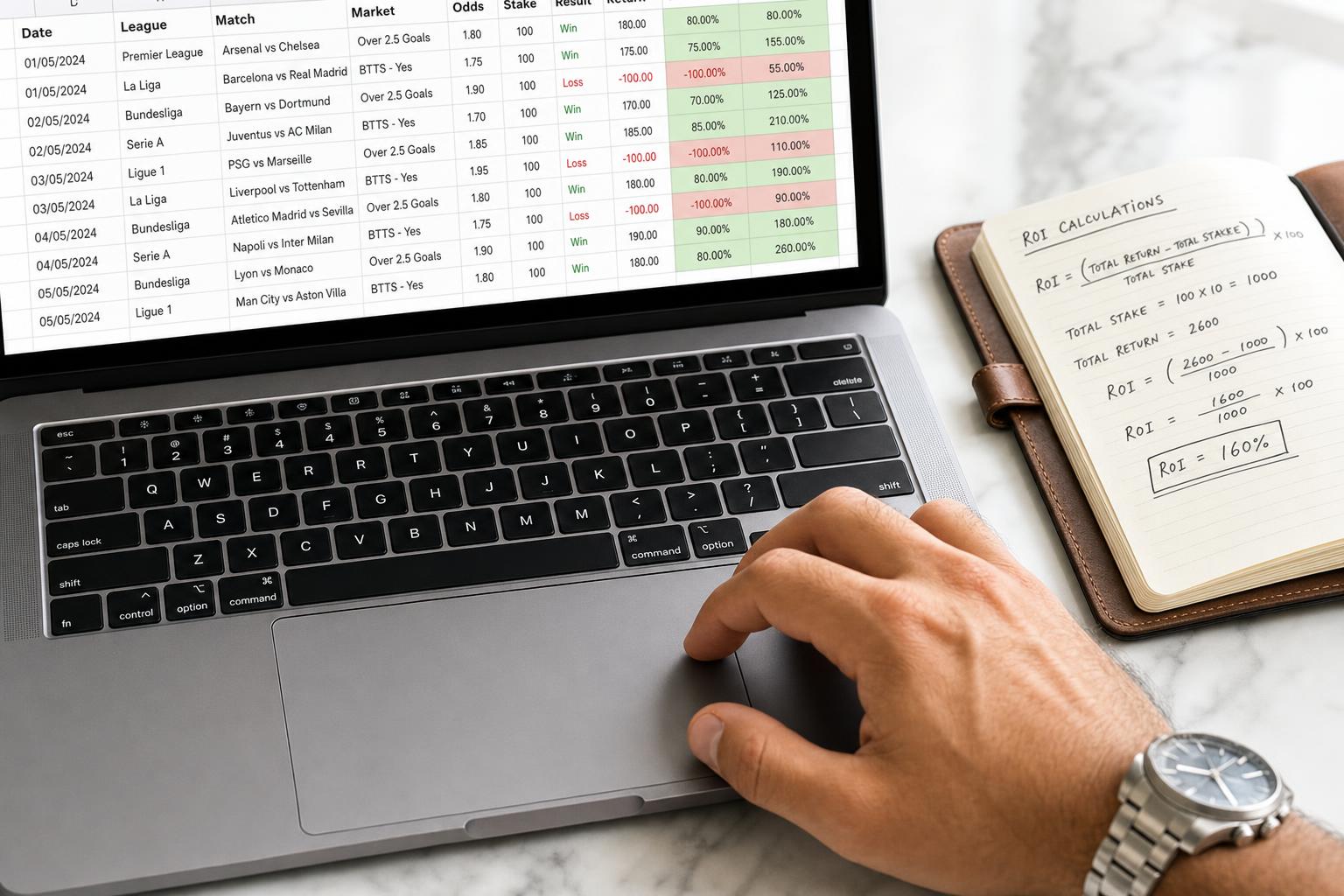
The most powerful advanced metric is Return on Investment (ROI), expressed as a percentage. Formula: (Total Profit ÷ Total Staked) × 100. An ROI above +3% over 200+ bets is genuinely strong in football betting. Most recreational bettors operate at a negative ROI without realising it.
Beyond ROI, add these columns to your betting spreadsheet for deeper insight:
- Closing Odds — the odds available when the market closed. Consistently beating closing odds is one of the strongest indicators of a genuine edge.
- Expected Value (EV) — did the odds represent value based on your estimated probability?
- League / Competition Tag — filter results by league to find where your knowledge is strongest.
- Bet Type Tag — which markets (BTTS, handicap, over 2.5) are driving performance?
- Tipster Source — if you follow external analysis, tag it to measure quality over time.
After 200 settled bets per category, patterns become statistically meaningful. You may discover your Premier League bets are profitable while your Champions League accumulators are quietly destroying your bank. Without the data, you would never know.
Strategy Tips: Turning Your Data Into Decisions
Raw tracking data is only valuable if you review it regularly and act on what it tells you. Schedule a weekly review of no more than fifteen minutes. Monthly deep-dives of thirty minutes. Annual audits where you challenge every assumption about your betting approach.
Here are the most effective strategy decisions that data-driven bettors make using their records:
1. Eliminate losing markets ruthlessly. If your over 2.5 goals bets show a consistent -8% ROI over 150 bets, stop placing them. Sunk cost thinking is the enemy here. The data has spoken.
2. Increase stakes in high-edge areas. If your home team handicap bets in the Bundesliga show a +7% ROI over 100 bets, this is where your edge may lie. Size up — carefully, within your staking plan.
3. Review your worst month, not your best. Your best month tells you very little. Your worst month tells you everything about discipline, process, and decision quality under pressure.
4. Compare your odds to closing line value. If you consistently beat closing odds, you are demonstrating real predictive skill. If you consistently get worse odds than closing, you may be acting on information the market has already priced in.
5. Use a flat stake model when uncertain. Until you have 300+ bets of data, use uniform stakes to avoid distorting your ROI figures with variable staking.
Betting Record Keeping Checklist
| Task | Frequency | Priority |
|---|---|---|
| Log every bet before kick-off | Per bet | 🔴 Critical |
| Record result and P&L after settlement | Per bet | 🔴 Critical |
| Update running bankroll total | Per bet | 🔴 Critical |
| Review ROI by market type | Weekly | 🟡 Important |
| Compare odds placed vs closing odds | Weekly | 🟡 Important |
| Tag bets by league and competition | Per bet | 🟡 Important |
| Conduct full monthly performance audit | Monthly | 🟢 Recommended |
| Eliminate consistently losing markets | Monthly | 🟢 Recommended |
| Adjust staking plan based on data | Quarterly | 🟢 Recommended |
| Annual strategy review and reset | Annually | 🔵 Advanced |

Conclusion: The Discipline That Separates Serious Bettors
Tracking your football betting results is not glamorous. It does not feel exciting the way placing a last-minute accumulator does. But it is the single habit that separates bettors who improve from those who spin their wheels indefinitely. Every professional in any performance discipline — from athletics to trading — measures their output obsessively. Football betting is no different.
Start with the basics. Build your betting spreadsheet this week. Log every bet before kick-off. Review your data honestly every month. Let the numbers guide your decisions rather than your emotions. Over time, you will build a body of evidence about your own betting behaviour that no tipster, no forum, and no gut instinct can replicate.
The edge is in the process. The process starts with the record.
Betiball does not accept bets. All examples are for educational purposes only.
Read more:

Your feedback helps us deliver better football betting insights.