

 Account
 Language
 Time Zone
 COEF
COEF


Betiball Glossary: Every Football Term, Match Status và Abbreviation Explained
Explore the complete Betiball Glossary with football terms, match statuses, betting abbreviations, and key definitions to understand every prediction with confidence.



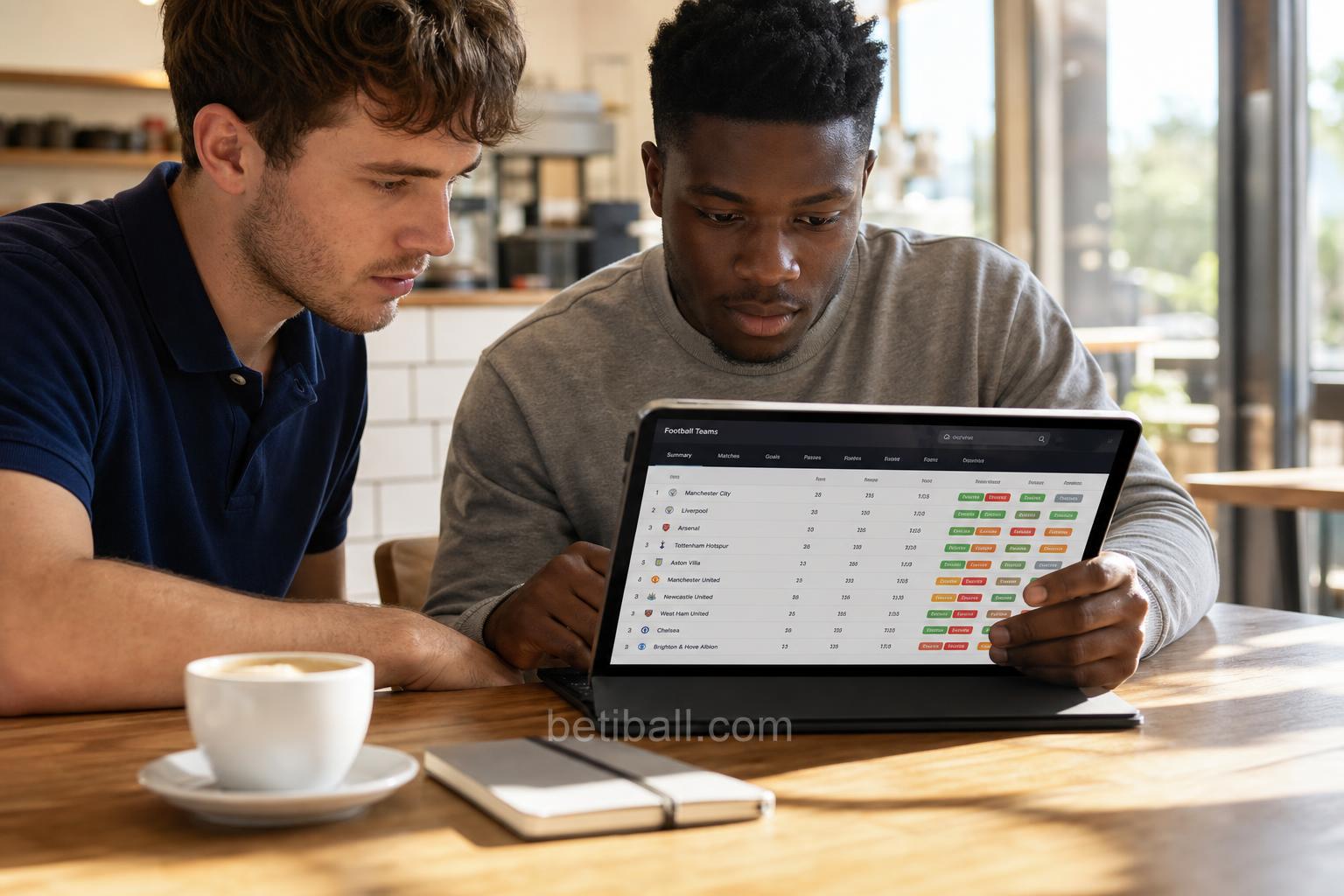
If you have ever browsed a football statistics platform and wondered what NS, FT, HT, or ET actually mean, you are not alone. The Betiball glossary football terms explained guide exists precisely for this reason. Betiball aggregates live and historical match data across hundreds of competitions, and understanding every abbreviation and status label on that dashboard is the first step toward making sharper, more informed decisions. This reference covers every core football term, match status code, and platform-specific abbreviation you will encounter — structured so you can scan quickly or read in full.
Who This Guide Is For
This glossary is written for serious football bettors, data analysts, and fantasy football managers who rely on statistical platforms to inform their thinking. Whether you are new to reading match data or you simply want to confirm the exact definition of an edge-case status like AET or PSO, this page is your reference point.
You do not need any prior background in football statistics. However, the content is written with an analytical mindset — every definition is paired with context on why it matters when you are evaluating a match, filtering results, or comparing team form across different competition formats.
- New users navigating the Betiball interface for the first time
- Experienced bettors who want a single, reliable reference for abbreviations
- Data-driven analysts building models that incorporate match status filters
- Fantasy football managers tracking live and historical fixture data

Basic Football Terms & Match Status Codes Explained
These are the foundational football abbreviations and match status labels. Understanding them is non-negotiable before you filter, sort, or analyse any dataset on a statistics platform.
Match Status Abbreviations
| Abbreviation | Full Term | What It Means |
|---|---|---|
| NS | Not Started | The match has been scheduled but has not yet kicked off. NS fixtures are upcoming games — no data is available yet beyond team lineups (if confirmed). |
| 1H | First Half | The match is currently in the first half of regulation time (minutes 1–45+). |
| HT | Half Time | The match is in the interval between the first and second half. Half-time scores are used in specific bet types including HT/FT markets. |
| 2H | Second Half | The match is live in the second half (minutes 46–90+). |
| FT | Full Time | The match has concluded at the end of 90 minutes (plus added time). This is the standard result used for most market settlements. |
| ET | Extra Time | The match has entered additional play beyond 90 minutes, typically two 15-minute periods. This applies in knockout rounds when the score is level at FT. |
| AET | After Extra Time | The final score after extra time has been completed. Relevant when a winner must be determined in a cup or knockout match. |
| PSO | Penalty Shoot-Out | The match was decided by a penalty shoot-out after extra time ended level. Most standard match markets settle on the AET score, not the shoot-out outcome. |
| POSTP | Postponed | The fixture has been delayed to a later date. No result is recorded; the match will be rescheduled. |
| CANC | Cancelled | The match will not be played at all. Different from postponed — there is no rescheduled date. |
| ABD | Abandoned | The match was stopped before completion due to weather, safety concerns, or other external factors. Scores at the time of abandonment may or may not count depending on league rules. |
| WO | Walkover | One team was awarded the result without play, usually because the opposing team failed to appear or was disqualified. |
Core Statistical Terms
| Term | Definition |
|---|---|
| xG (Expected Goals) | A probability-based metric that measures the quality of a shot. An xG of 0.8 means the average player would score from that position 80% of the time. |
| 1X2 | The three-way match result market: 1 = Home Win, X = Draw, 2 = Away Win. |
| BTTS | Both Teams To Score — a market where both sides must register at least one goal for the bet to win. |
| O/U (Over/Under) | A total goals market. Over 2.5 goals means three or more goals must be scored; under 2.5 means two or fewer. |
| CS (Clean Sheet) | A team concedes zero goals in a match. |
| DCBL (Double Chance) | A market covering two of the three possible match outcomes at once (e.g. Home Win or Draw). |
Advanced Football Abbreviations & Competition Terms
Once you move beyond single-match data into competition structures, squad analysis, and advanced metrics, a second tier of terminology becomes essential. These are the terms you will encounter most often when filtering Betiball's competition and team-level data.
Competition Format Terms
| Abbreviation / Term | Full Term | Meaning |
|---|---|---|
| GS | Group Stage | The round-robin phase of a cup competition where teams are divided into groups and play all other teams in their group once. |
| R32 / R16 / QF / SF / F | Round of 32 / 16 / Quarter-Final / Semi-Final / Final | Knockout round identifiers used in cup competitions. Critical for filtering data by competition phase. |
| UCL / UEL / UECL | UEFA Champions League / Europa League / Conference League | The three tiers of European club competition. Market dynamics, squad rotation, and fixture density differ significantly between them. |
| AGG | Aggregate Score | The combined score across both legs of a two-legged knockout tie. Used to determine which team advances. |
| AL (Away Goals) | Away Goals Rule | A now largely discontinued tiebreaker where goals scored away from home count double in level aggregate ties. Check each competition's current ruleset — UEFA abolished this in 2021. |
| P (Played) | Matches Played | Total number of league fixtures completed by a team in a season. |
| GD | Goal Difference | Goals scored minus goals conceded. Used as a tiebreaker in league tables when teams are level on points. |
| PPG | Points Per Game | Average league points earned per match. More reliable than raw points totals when comparing teams with different matches played. |
Player & Squad Data Terms
| Term | Definition |
|---|---|
| YC / RC | Yellow Card / Red Card — disciplinary events that affect team dynamics and suspension records. |
| SUB | Substitution — a player swap tracked in match event timelines. |
| INJ | Injury — a player listed as unavailable due to a physical issue. Injury lists directly affect team selection probability models. |
| SUS | Suspension — a player serving a ban due to card accumulation or a specific disciplinary ruling. |
| OG | Own Goal — a goal credited to the opposing team when a player accidentally scores in their own net. |

Strategy Tips: How to Use Football Abbreviations Effectively
Knowing the definitions is step one. Using them as active filters and decision signals is where analytical advantage is built. Below are four practical tips for serious users.
1. Filter by Match Status to Clean Your Dataset
When reviewing historical form, always filter for FT results only. Including ABD, POSTP, or WO results in your calculations introduces statistical noise. Most models should be built exclusively on completed 90-minute results unless you are specifically analysing disruption patterns.
2. Separate FT Data from AET Data
Extra time football is a structurally different game — teams are fatigued, tactical setups shift, and variance is significantly higher than in regulation play. Never pool FT and AET goal data in the same over/under model without flagging the distinction. Teams with strong penalty shoot-out records (PSO) carry a compounding edge in knockout formats that does not appear in 90-minute statistics.
3. Use HT Scores as a Leading Indicator
Half-time (HT) data is one of the most underused predictive inputs available. Teams that consistently lead at HT have a measurably different defensive structure and pressing intensity compared to teams that frequently draw at the break. Filter Betiball's HT/FT data by competition and home/away split to identify these patterns at scale.
4. Track NS Fixtures for Line Movement
NS (Not Started) matches are the point at which odds are most responsive to new information — confirmed lineups, late injury news, or weather changes. Monitoring which NS fixtures shift most significantly in the hours before kick-off can reveal where sharp money is moving, even on a statistics-first platform.
| Checklist Item | Why It Matters | Status Filter to Use |
|---|---|---|
| Confirm match status is FT before including in model | Avoids incomplete or invalid results | FT only |
| Separate regulation vs extra time results | AET introduces fatigue variance | FT / AET split |
| Check INJ and SUS lists for NS fixtures | Missing key players shifts xG forecasts | NS + team news |
| Filter HT scores by home/away split | HT trends differ significantly by venue | HT data, home/away |
| Verify competition round (GS vs knockout) | Team motivation and rotation varies by stage | GS / R16 / QF / SF / F |
Betiball does not accept bets. All examples are for educational purposes only.
Conclusion: Build Your Edge on Shared Language
Every

Your feedback helps us deliver better football betting insights.