


 Account
 Language
 Time Zone
 COEF
COEF


Asian Handicap Betting Explained: Full Football Guide
Learn how asian handicap explained football markets work, from -0.5 lines to quarter goals. Master handicap betting with data-backed strategy. Explore more on Betiball.
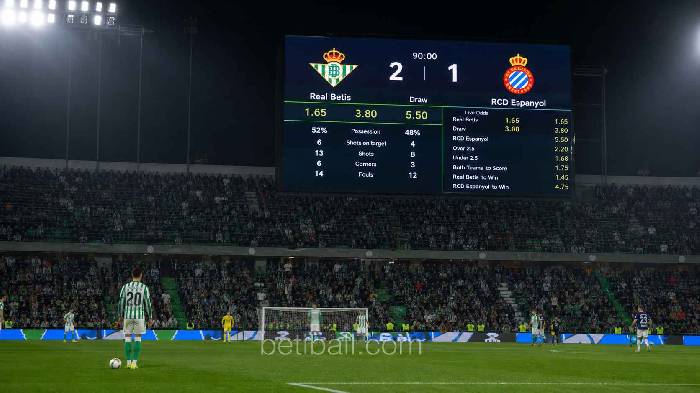


If you've spent any time researching football betting markets, you've almost certainly come across the term over under 2.5 goals explained in tutorials, tipster threads, and pre-match previews. It's one of the most traded markets in world football — and for good reason. The bet is clean, binary, and strips away the complexity of match result prediction. But simplicity on the surface doesn't mean it should be approached without structure. Understanding how the total goals market is priced, when it edges in your favour, and where bettors consistently go wrong can sharpen your decision-making significantly.
Betiball aggregates match statistics, team form data, and historical goal averages to help bettors identify value across exactly these kinds of markets. This guide breaks the over/under 2.5 goals market down to its core mechanics.

What Is the Over/Under 2.5 Goals Market?
The over/under 2.5 goals bet is a wager on the total number of goals scored across both teams during a match — typically covering 90 minutes of regulation play, excluding extra time. The "2.5" is a threshold line set by the bookmaker. Because goals are whole numbers and you can never score half a goal, the 0.5 increment creates a clean split:
- Over 2.5 goals: The match ends with 3 or more goals combined. Your bet wins.
- Under 2.5 goals: The match ends with 0, 1, or 2 goals combined. Your bet wins.
There is no draw outcome. Every result falls definitively on one side of the line. This is a core distinction from the 1X2 match result market, where the draw creates a three-way split and significantly affects probability pricing.
The market sits within the broader total goals betting category, which also includes lines set at 1.5, 3.5, 4.5, and beyond. The 2.5 line is by far the most popular because it sits near the statistical average in most major European leagues, creating competitive two-sided markets with tighter margins.
How the Over/Under Betting Odds Are Calculated
Bookmakers don't set odds arbitrarily. Pricing for the over/under market is driven by historical goal data, team form, head-to-head records, team news, and increasingly, in-play signal adjustments. The underlying model attempts to assign a probability to each side of the line, then translate that probability into a decimal or fractional odd with a margin built in.
Here's a simplified version of how that works:
If a bookmaker's model gives a match a 55% probability of producing over 2.5 goals, the "fair" decimal odd for that outcome would be 1/0.55 = approximately 1.82. The "fair" odd for under 2.5 goals at 45% probability would be 1/0.45 = approximately 2.22. After applying a 5% overround (margin), you might see odds of 1.73 and 2.10 respectively in the market.
This means identifying value requires you to assess whether the true probability of a particular outcome is higher than what the odds imply. If you believe there is a 62% chance of over 2.5 goals in a given match but the odds suggest only 55%, you have a mathematical edge — in theory.

A Numeric Example: Walking Through a Real Scenario
Let's say Arsenal are hosting Brentford. The bookmaker has priced over 2.5 goals at 1.75 and under 2.5 goals at 2.10.
Implied probabilities:
- Over 2.5: 1 ÷ 1.75 = 57.1%
- Under 2.5: 1 ÷ 2.10 = 47.6%
Note that these add up to 104.7%, not 100%. The extra 4.7% is the bookmaker's margin. Now you do your research using Betiball's team stats filters. You find:
- Arsenal's last 8 home matches averaged 3.4 goals per game
- Brentford's last 8 away matches averaged 2.9 goals per game
- The head-to-head record shows 5 of the last 6 meetings produced 3 or more goals
- Both teams have attacking injuries but also leaky defences
Your analysis puts the real probability of over 2.5 goals closer to 65%. The odds of 1.75 imply only 57.1%. That gap — 65% minus 57.1% — represents a potential value edge. Whether you act on it depends on your staking methodology and confidence level in your model.
If you had staked €100 on over 2.5 goals at 1.75 and the match ended 2-1 (under), you'd lose €100. If it ended 2-2 (over), you'd return €175 — a profit of €75. The bet outcome is always binary. The value argument is statistical and plays out across a sample of bets, not a single wager.
When to Back Over or Under 2.5 Goals
The most consistent edges in the total goals market tend to emerge from structural conditions rather than gut feeling. Here are the core scenarios where experienced analysts find the most traction:
When to consider Over 2.5 Goals
- Both teams average high xG (expected goals) per game. Expected goals is one of the most predictive metrics for future scoring output. If both sides regularly generate high-quality chances, total goals tend to follow.
- Matches with weak or injury-hit defences. Central defensive absences can significantly inflate scoring probabilities.
- High-stakes attacking games. When a team needs a win and commits forward from the start, the open nature of the game inflates scoring on both ends.
- Historically high-scoring fixtures. Some club rivalries consistently produce goals irrespective of current form. Head-to-head data over 8–10 meetings provides useful signal.
When to consider Under 2.5 Goals
- Low-stakes, late-season matches where a draw suits both teams. These matches often lack intensity and tempo.
- Teams with dominant defensive structures and low xGA. Historically, a well-organised defence suppresses chances more reliably than statistics on the other end of the pitch.
- Derby matches or cup ties where caution prevails. High-pressure knockout games frequently produce fewer than 3 goals in 90 minutes.
- Poor weather and heavy pitches. Playing surface quality directly affects pace and technical execution, which tends to reduce goal tallies.

Common Mistakes Bettors Make in the Total Goals Market
Even bettors who understand the mechanics of what is over 2.5 goals structurally can fall into patterns that erode their results over time. These are the most frequently observed errors:
1. Recency bias over sample size. A team scoring in their last 3 games doesn't override a broader defensive trend across 20 matches. Always look at a statistically meaningful sample — ideally 10 or more matches — before drawing conclusions.
2. Ignoring line movement. When sharp money moves into a market, odds shift. If over 2.5 opens at 1.85 and drops to 1.65 by kick-off, something has changed in the market's collective assessment. This signal shouldn't be ignored, even if you don't know the precise reason.
3. Treating the market as lower variance than it is. Many bettors move to the total goals market because it feels more predictable than the 1X2 market. Statistically, single match outcomes are still high-variance events regardless of the bet type. A single goalkeeping error, red card, or penalty can flip an under 2.5 bet in the 88th minute.
4. Failing to account for match context. A team that needs a win plays very differently from one that is defending a lead. Situational football analysis is just as important as raw statistical filters.
5. Staking inconsistently. Flat staking with consistent unit sizes across your selections maintains discipline and allows for honest performance tracking. Variable staking driven by "confidence" without a formal model is one of the fastest routes to distorted bankroll management.

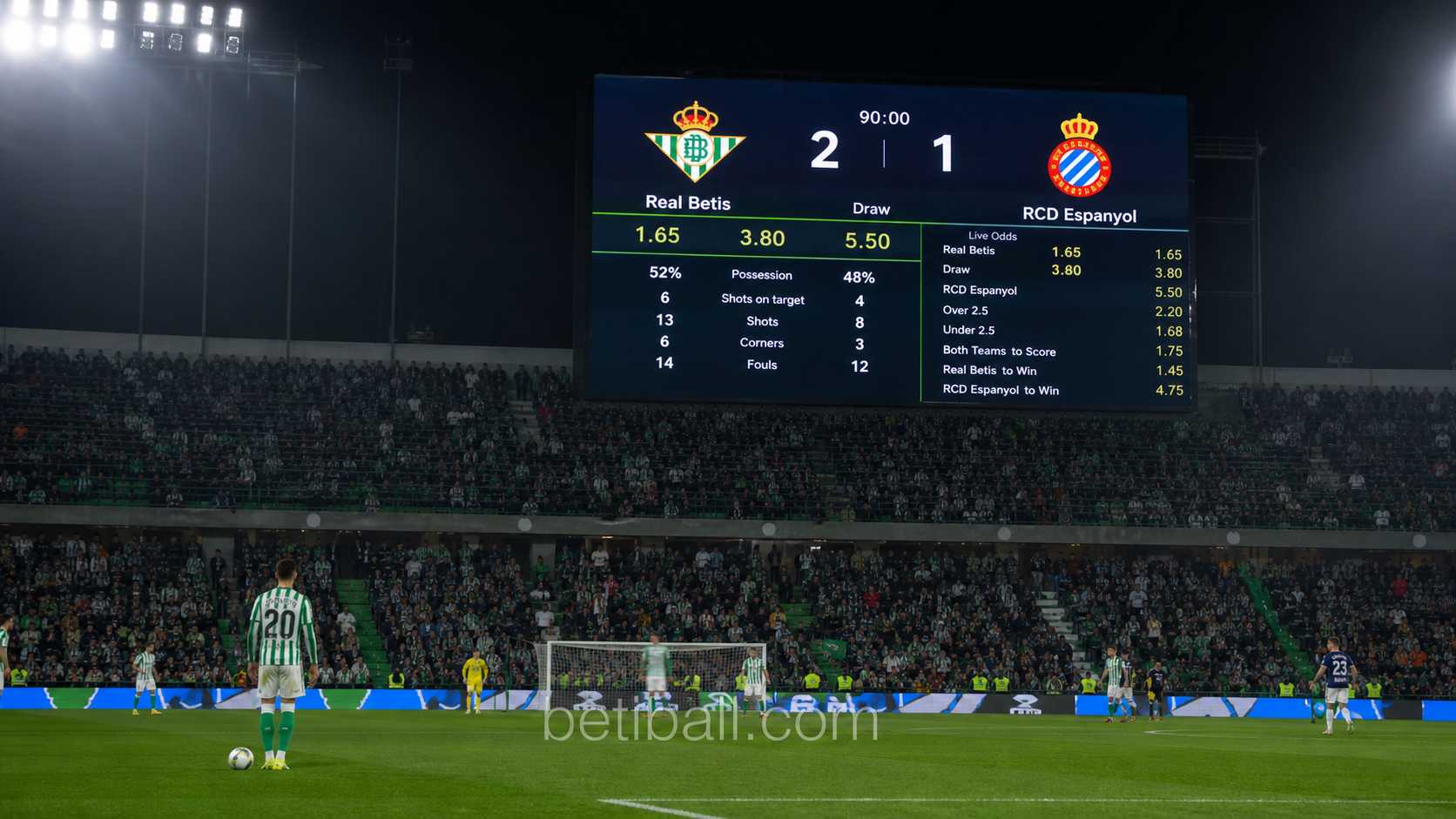
If you've spent any time exploring football betting markets, you've almost certainly encountered the term asian handicap explained football in forum threads, tipster breakdowns, or odds comparison sites — and walked away more confused than when you started. You're not alone. Asian handicap betting is one of the most misunderstood yet statistically rewarding bet types available. This guide will break down exactly how it works, why sharp bettors prefer it over traditional markets, and how to use it strategically. Betiball provides detailed match data and market filters to help you identify the right handicap lines before you place a bet.
Who This Guide Is For
This guide is written for football bettors who already understand basic concepts like 1X2 betting and over/under markets, and are ready to move into more advanced territory. If you're comfortable reading odds, understand the concept of implied probability, and want to reduce the bookmaker's edge, asian handicap betting is the next logical step in your development.
You don't need a mathematics degree, but you do need patience and a willingness to think beyond the standard three-way result. Asian handicap markets reward disciplined, data-driven bettors more consistently than many other bet types — and the elimination of the draw as a possible outcome is a significant structural advantage worth understanding in depth.
Asian Handicap Basics: How It Actually Works
At its core, asian handicap betting gives one team a virtual head start (or deficit) before the match begins, expressed in goals. The purpose is twofold: to level the playing field between mismatched opponents, and to eliminate the draw outcome from the market entirely.
Here's the foundational logic. In a standard 1X2 market, there are three possible outcomes. In asian handicap, there are only two — which immediately gives you a base probability of 50% per selection before any analysis. Bookmakers love the draw because it's a third trap for bettors. Asian handicap removes it.
Whole Number Handicaps
When a handicap is set at a whole number (e.g., -1, +1, -2), a push (refund) is possible if the adjusted result lands exactly on zero. For example, if you back Team A at -1 and they win by exactly one goal, your stake is refunded. This is the one exception to the "two-outcome" rule.
Quarter and Half Handicaps
Half-goal handicaps (e.g., asian handicap -0.5) eliminate the push entirely. If you back a team at -0.5 and they win by any margin, you win the bet. If they draw or lose, you lose. Clean, binary, no refund possible.
Quarter handicaps (e.g., -0.25 or -0.75) are where it gets interesting — and profitable. A -0.25 handicap splits your stake equally across two bets: -0 (level) and -0.5. This means partial wins and partial losses are possible, giving you a buffer against marginal results.
| Handicap Type | Push Possible? | Partial Win/Loss? | Best Used When |
|---|---|---|---|
| -0.5 / +0.5 | No | No | Clear favourite likely to win |
| -1 / +1 (whole) | Yes (on exact margin) | No | Strong favourite vs weak side |
| -0.25 / +0.25 | No | Yes | Slight edge, want draw protection |
| -0.75 / +0.75 | No | Yes | Moderate favourite, need margin buffer |
| -1.5 / +1.5 | No | No | Heavy mismatch expected |

Asian Handicap vs European Handicap: Key Differences
The asian handicap vs european debate is important because many bettors confuse the two systems, especially when switching between bookmakers.
European Handicap (3-way) keeps the draw as a possible outcome even after the handicap is applied. So if you back Team A at -1 European handicap and they win by exactly one goal, the result is a 0-0 adjusted score — and the draw outcome wins, not you. This is a crucial trap that costs recreational bettors significant money each season.
Asian Handicap (2-way) eliminates this scenario. The draw is either refunded (whole number) or prevented entirely (half/quarter handicap). This structural difference means asian handicap typically offers lower margin odds — closer to true probability — because bookmakers can't hide edge in the draw outcome.
In practical terms, a competent asian handicap bettor is operating in a market with roughly 2-4% bookmaker margin compared to 8-12% in standard 1X2 markets. Over a betting season, that difference is the gap between a profitable and unprofitable record.
A Concrete Example
Manchester City host Norwich City. The asian handicap line is set at City -2.5. If City win 3-0, 4-1, or by any margin exceeding 2 goals, the -2.5 bet wins. If they win 2-0 or 1-0, or draw, or lose — the bet loses. No ambiguity, no draw trap. European handicap on the same line would still carry a draw scenario at exactly 2 goals.

Advanced Asian Handicap Strategy for Serious Bettors
Understanding the mechanics is only the starting point. Profitable asian handicap betting requires layering match data, line movement analysis, and situational context on top of the structural advantage you already have.
1. Track Line Movement
When the asian handicap line moves — say from -0.5 to -1 for a favourite — it signals sharp money coming in on that side. Bookmakers adjust lines to balance liability, not to reflect their own opinion. A line moving against the public usually means informed bettors are on the other side. Monitor opening lines versus closing lines as a core part of your research process.
2. Exploit the -0.5 Handicap on Home Favourites
The asian handicap -0.5 on home favourites is statistically one of the most consistent spots in domestic football. Home teams that are priced as short favourites in 1X2 markets win more often than they draw or lose — but the draw probability suppresses their 1X2 value. At -0.5, you're effectively betting "home win" with a 2-outcome structure and tighter margins. Filter matches on Betiball's market pages by home win rate, expected goals (xG), and recent form to find value in this exact line.
3. Use Expected Goals (xG) as a Handicap Anchor
If a team's expected goals for (xGF) average over a rolling 10-game sample significantly exceeds the handicap line, there's structural value on the favourite. Conversely, if a team consistently underperforms their xG, backing them on a -0.5 or -1 handicap carries more risk than the odds imply. Data-led decisions in this market beat gut feel over any meaningful sample size.
4. Context Beats Raw Statistics
A team entering a match with Champions League fixtures three days later, or protecting a squad during a congested schedule, may tactically approach a league game differently. Top managers rotate intentionally. A side that averages 2.1 goals per home game may deploy a second-string lineup — and the handicap line won't fully account for that if it was set before team news drops. Monitor confirmed lineups and late team news religiously before committing to handicap positions.
5. Avoid Chasing Inflated Lines in High-Profile Fixtures
Public betting pressure in high-profile fixtures — Champions League knockouts, top-of-table clashes — inflates favourite handicap lines. When the market forces a favourite to cover -2 or -2.5 to justify the implied probability, you're often better served taking the underdog on the receiving end of the handicap. A +1.5 or +2 for a defensively disciplined underdog in a tight fixture is frequently better value than the headline selection.
How to Use Betiball for Asian Handicap Research
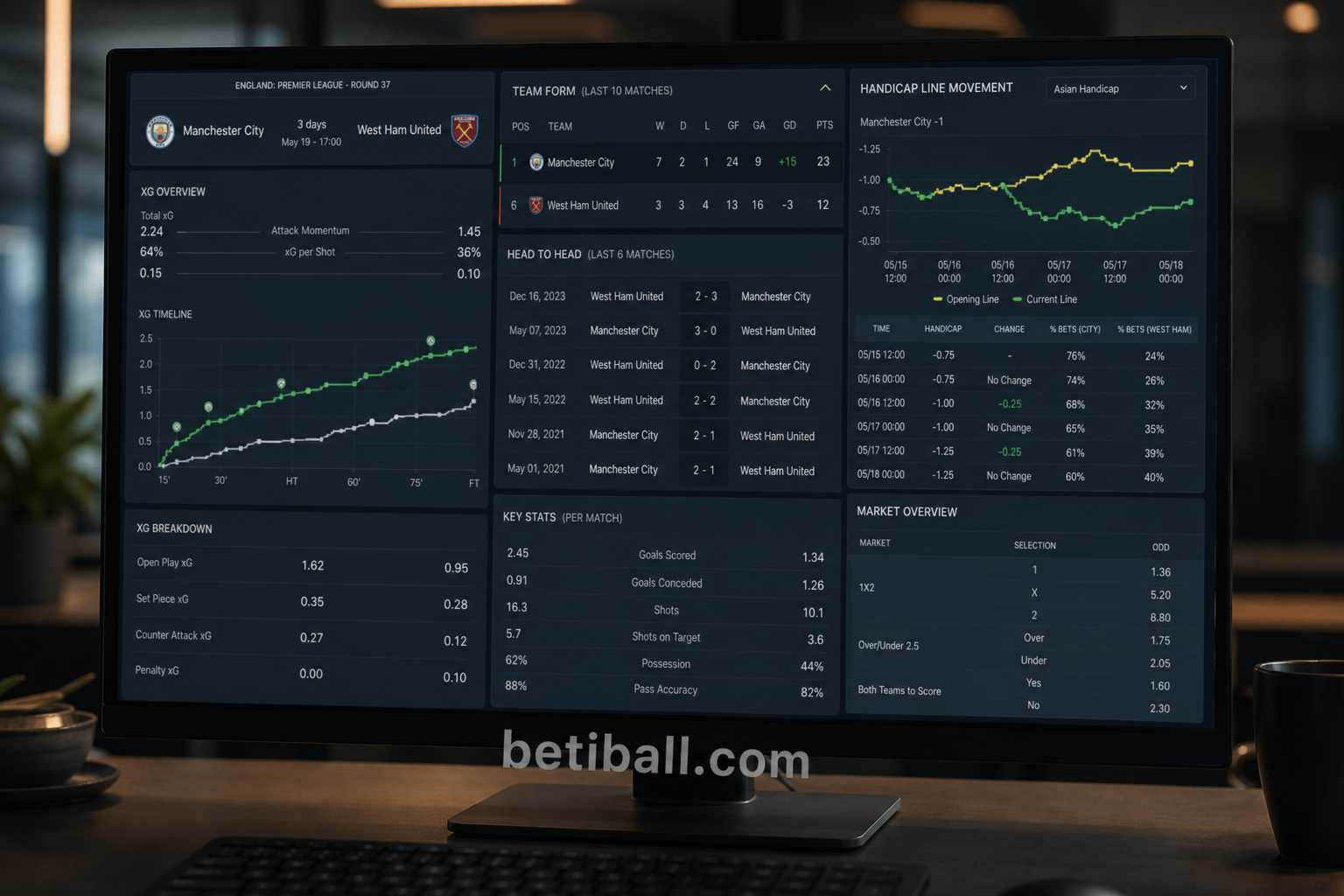
Effective handicap betting is inseparable from effective data access. Betiball's match statistics platform allows you to filter upcoming fixtures by league, form metrics, head-to-head records, and expected goals data — all of which feed directly into handicap analysis.
Before settling on a handicap position for any fixture, run through this research sequence:
- Check the team's last 10 matches — win/draw/loss split, goals scored, goals conceded, and xG data.
- Review head-to-head history — does one side consistently cover or fail to cover in this specific matchup?
- Assess the handicap line relative to form — is the line set by public perception or by actual performance data?
- Monitor line movement 24-48 hours before kickoff — sharp movement is informative.
- Confirm late team news — lineup confirmations can invalidate an entire handicap thesis in minutes.
This five-step process, applied consistently, will sharpen your handicap selection rate more than any single betting system or tipster service.
Conclusion
Asian handicap betting is not a shortcut to profit — it's a structurally superior betting format for bettors who are willing to do the analytical work behind each selection. By eliminating the draw, operating in lower-margin markets, and offering granular quarter-goal lines, it gives disciplined bettors more tools and better conditions than standard 1X2 markets. The fundamentals covered in this guide — understanding line types, distinguishing asian from european handicap, tracking xG, and analysing line movement — are the building blocks every serious football bettor should have in place before committing stakes to this market.
Betiball does not accept bets. All examples are for educational purposes only.
Read more:
Betiball does not accept bets. All examples are for educational purposes only.
Conclusion: Use Data to Find Your Edge in the 2.5 Market
The over/under 2.5 goals market is accessible, well-understood, and widely available — but that same accessibility means the market is efficiently priced more often than not. Finding consistent value requires disciplined research, meaningful sample sizes, and an honest assessment of probability versus implied odds. Use team form data, expected goals metrics, head-to-head records, and contextual match analysis as inputs. Avoid letting recent results or emotional attachment distort your probability estimates.
Betiball's statistical filters allow you to segment matches by average goals per game, clean sheet rate, and historical over/under outcomes — giving you the data infrastructure to build more informed assessments before you make a decision. Start with the data, build your edge on evidence, and track your results rigorously over time.

Your feedback helps us deliver better football betting insights.