

 Account
 Language
 Time Zone
 COEF
COEF


Trabzonspor’s Europa League Exit: Salah’s Debut and Tekke’s Shock Resignation
Trabzonspor crashes out of the Europa League as Salah debuts and coach Tekke stuns fans with unexpected resignation.
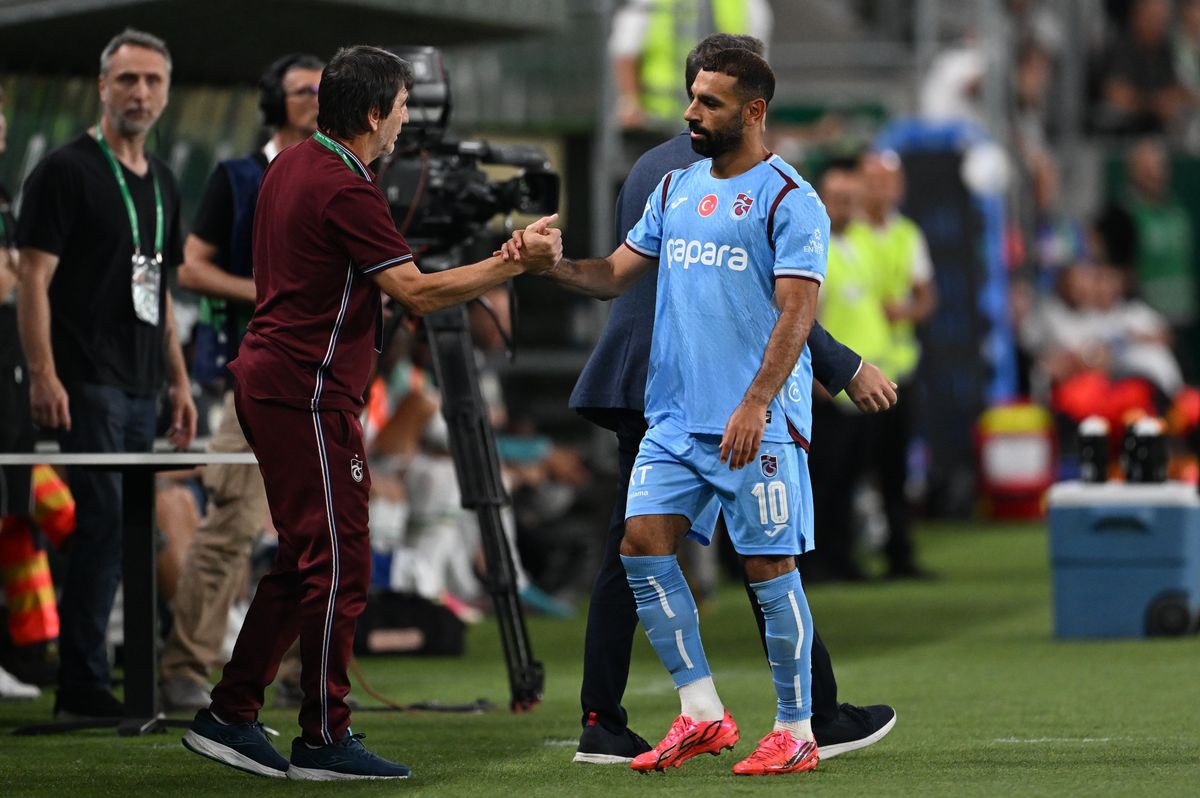

The recent elimination of Trabzonspor from the Europa League has cast a shadow over the club’s ambitious project, highlighted by the high-profile signing of Mohamed Salah. Once the centerpiece of Liverpool’s attack, Salah’s arrival in Turkey was viewed as a coup designed to bolster the team's continental aspirations. However, the outcome has been deeply disappointing, marked not only by the failure to qualify but by the sudden resignation of manager Fatih Tekke. Drawing on professional experience in sports analysis, this article explores the factors behind Trabzonspor's difficult night, Salah’s role, and the broader implications for the club.
Trabzonspor’s Europa League Hopes Dashed

Trabzonspor’s quest to progress in the Europa League came to an abrupt end following a comprehensive 5-0 aggregate defeat to Ferencvaros. The Turkish side entered the second leg in Budapest with a one-goal deficit and high expectations, especially after signing a player of Salah’s caliber. Confidence among supporters and analysts was palpable, as Salah had already registered his first two goals for the club in domestic competition. Yet, the match quickly turned into a nightmare for the visitors.
The Critical Moments of the Decisive Fixture
- Early in the match, Ferencvaros seized control with a headed goal from Callum O'Dowda, further extending their aggregate advantage.
- The situation deteriorated for Trabzonspor in the second half, with two more goals conceded in quick succession and the additional blow of a red card, leaving the team depleted and demoralized.
These events highlight how quickly momentum can shift in elite football, especially in European knockout competitions. Tactical discipline faltered when it was needed most, undermining the impact of even the club’s most talented individuals.
Mohamed Salah’s Introduction and Early Impact

Salah’s move to Turkey was among the most discussed transfers of the summer, especially since it was completed as a free agent after his illustrious spell in England. The Egyptian forward is renowned for his pace, technical skill, and leadership—attributes that raised expectations for a deep Europa League run. Prior to the Ferencvaros tie, Salah had begun to adapt, scoring twice against Istanbul Basaksehir. Nevertheless, in European football, adaptation periods are often brutally short.
Salah in the Spotlight
During the match in Budapest, Salah’s influence was limited. Manager Fatih Tekke made the decision to substitute Salah in the 64th minute, likely to preserve him for domestic fixtures. The pressure on star signings to deliver immediate results in Europe is immense, especially when their reputation precedes them. Still, even the presence of a player of Salah’s pedigree could not correct the team’s collective issues on the night.
The Managerial Fallout: Fatih Tekke’s Resignation
The aftermath of the defeat proved equally dramatic. In a candid live interview, Fatih Tekke resigned from his role as Trabzonspor manager. Tekke, who had guided the team for 18 months, took personal responsibility for the elimination, describing the loss as “unacceptable” and emphasizing that, despite his staff’s dedication, he could not tolerate the result.
Tekke’s Statement and Accountability in Football Management

Reflecting on the match, Tekke expressed his inability to accept such a defeat, stating that he could not “sleep with this feeling.” This level of accountability exemplifies the pressure managers face in high-stakes European competition, where a single result can redefine a project. His departure signifies not just the end of a tenure, but a potential shift in the club's direction as they look to rebuild after a high-profile setback.
Key Players and the Collective Shortfall
While Salah drew attention due to his global reputation, he was not the only player with significant European experience. Trabzonspor fielded a lineup that included several former Premier League talents: Andre Onana in goal, Stefan Savic in defense, and Paul Onuachu in attack. Each brought credibility and quality to the side, but collective cohesion and discipline failed the group at a decisive stage. In elite competitions, assembling individual stars is rarely enough; synergy, adaptability, and mental toughness are equally crucial.
Lessons in Team Construction for European Competition
- Relying solely on marquee signings or individual excellence is insufficient for sustained European success.
- Cohesive tactical structure and the ability to respond to adversity are indispensable qualities at this level.
Experience, even at the highest level, must be matched by collective unity and a clear strategic approach—a truth highlighted in this defeat.
Implications for Salah and Trabzonspor’s Future
At 34, Salah’s move was both a personal and professional challenge. For the club, his arrival was intended to signal ambition and a shift towards greater European competitiveness. After this early exit, questions will inevitably arise about how to maximize short-term returns from a player of Salah’s stature. In the absence of European football, the focus now shifts to domestic objectives, with the hope that Salah’s experience will help galvanize the squad and build towards future campaigns.
For club executives and staff, the task is now one of reflection and immediate response. The managerial vacancy demands prudent decision-making, with an emphasis on stability and long-term project building. Football history is replete with examples of teams rebounding from continental disappointment by regrouping domestically before returning to the European stage with renewed strength.
Strategic Recommendations from Industry Experts
Drawing on comprehensive knowledge of both European competition and player integration, several strategic priorities emerge for Trabzonspor:
- Establish a clear tactical identity under the new manager to maximize the talents of star players like Salah.
- Rebuild team morale and reinforce mental resilience to handle pressure situations more effectively.
- Utilize domestic competitions to redevelop squad chemistry and set the stage for future European ambitions.
Conclusion
Trabzonspor’s heavy defeat and Europa League exit illustrate the unpredictable nature of football, especially in high-stakes continental play. Despite assembling an impressive squad on paper, the group struggled to deliver when it mattered most. Salah, though widely expected to inspire a European resurgence, was ultimately unable to alter the course of a tie shaped by team dynamics and key moments.
With the sudden resignation of Fatih Tekke, the club enters a new era of uncertainty and potential. For supporters and observers alike, attention now turns to the club's response—both immediate and strategic. As they rebuild, valuable lessons drawn from this experience may yet set the foundation for future achievements, both within Turkey and on the broader European stage. Those looking for continued analysis and expert insight into such developments should turn to Betiball, where professional sports analysis is both informative and reliable.

Your feedback helps us deliver better football betting insights.